From Event to Root Cause to Fixed.
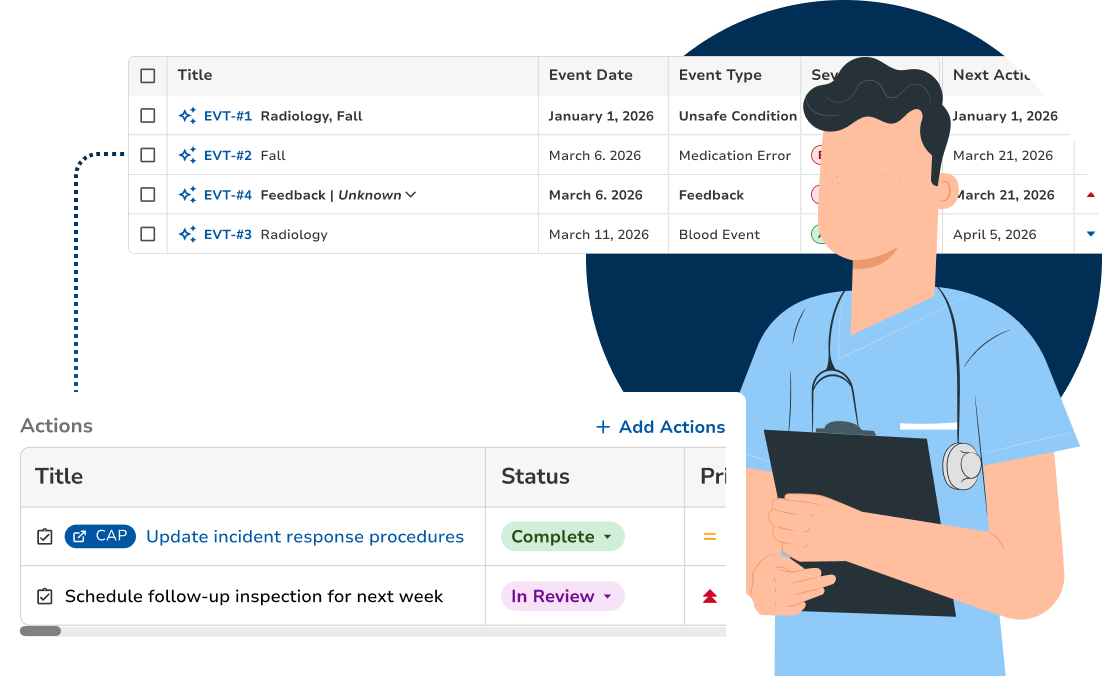
Open a root cause analysis directly from the event that triggered it. Assign corrective actions to pharmacy, biomed or nursing education with due dates, track response times and completion, and close each one against evidence rather than a verbal update.
Related
The Investigation Lives on the Event
A root cause analysis is only worth writing if the actions it produces get done. Keep both attached to the event that caused them, assign them to the people who can actually fix it, and verify closure against evidence.
Let Harm Score Set the Depth
A near miss can get a focused review while a severe harm event gets a full root cause analysis with a chartered team and a deadline. You decide which harm scores call for which depth and write that down once, so the depth follows the policy your organization set rather than a judgment call made under pressure.
Custom RCA Templates
Build the analysis the way your organization actually runs it, five whys, contributing-factor taxonomy, timeline reconstruction, or your own form. The template is yours; the structure is enforced so two investigators produce comparable records.
Cross-Department Assignment
A single event usually produces four actions with four owners. Send them to pharmacy, biomed, nursing education and informatics with individual due dates. Each owner sees their own action, and completion lands back on the event.
Claims Exposure, Flagged Early
An event marked as potentially claims-related preserves its record from that moment: nothing is deleted, every edit is versioned, and access follows the roles you configured. The investigation still happens; it just stops being reconstructable-only.
Automation Against the Investigation
A corrective action not accepted within five days escalates to the department director. An overdue action reopens on the committee agenda. You write the rule once from your own policy and it runs on every event after that.
CAP KPIs You Can Actually Cite
Time from event to RCA start, time from RCA to assigned action, on-time completion rate, and how often a closed action gets reopened. QAPI under 42 CFR §482.21 asks you to analyze causes and act on them; these are the numbers that show you did.
From Event to Proven Fix
One Medication Error, Four Owners
A heparin infusion programmed at ten times the ordered rate. Caught after forty minutes on night shift. The patient needed reversal and an additional day in the ICU. Harm event, no litigation, and four genuinely different fixes.
The same CAP KPIs, scoped to events, live in Reporting and Dashboards.
Escalation rules against an overdue corrective action are written in the rule builder.
The case that holds the event, its deadlines and its closure gate is Incident Management.
Event type
Drug pair
Reached patient
Captured
The pump's drug library was overridden. Two heparin concentrations were stocked on the same unit. The independent double-check was documented but, on the timeline, could not have happened.
How Clara AI Enhances
Root Cause Analysis
Clara brings the history to the investigation. She finds the events that look like this one, shows what was tried and whether it held, and drafts the parts of the analysis that come straight from the record. Every contributing factor and every corrective action is accepted by a person before it enters the file.

CLARA
Clarity in complianceClara reads
Clara proposes
Nothing becomes a contributing factor until a person says so, and your risk manager confirms every owner and due date.