One Incident. One Case File.

Triage, assign, investigate and close every incident in one place, patient, employee, visitor, security or property. Severity scoring sets the clock, the record captures every action with a timestamp, and closure is something you can hand to legal.

Incident Reporting and Resolution

The Queue That Runs Itself

An incident is not finished when someone writes it down. It is finished when a cause is named, an action has an owner, a deadline was met, and all of that is one record instead of four.

One queue, every incident type

Patient events, employee injuries, visitor falls, security incidents, property damage, contractor events and IT downtime share the same queue, the same fields where they overlap and different fields where they do not.

Severity sets the clock

Triage assigns a severity, and the severity determines the deadline. The clock runs from the date the incident occurred, not the date somebody got round to opening the case. It is on the case, not on a legal pad.

Assignment across departments

Send an investigation step to pharmacy, biomed, facilities or education with a due date. They see their piece and nothing else, and their completion lands back on your case without an email.

The investigation record

Interviews, chart references, photographs, device serial numbers, a timeline and contributing factors, all attached to the case, all timestamped, all attributable to a person. Not an attachment folder. A record.

Reportability, decided once

Whether an incident is externally reportable, to whom, and by when is a dated decision recorded on the case with the reasoning behind it. Made once, visible forever, defensible when someone asks two years later.

Closure you can defend

An incident cannot be closed until it has what your own policy says it needs: a named cause, a corrective action, an owner and a verification date. Closing is a gate, not a checkbox.

Supporting Events Such as

Feedback
Abuse/Suspected Abuse
Airway Management
Aggression/Workplace Violence
Blood Product
Diagnostic Treatment
Radiology
Employment Injury
Equipment/Medical Device
Facilities
Fall
Healthcare IT
Infection
IV/Vascular Access Device
Lab Specimen
Line/Tube Event
Maternal/Childbirth
Medication/Fluid
Patient ID/Documentation/Consent
Professional Conduct
Provision of Care
Radiation Treatment
Restraints
Safety/Security
Self-Injurious Behavior
Skin/Tissue
Suicidal Ideation and Behavior
Surgery/Practice
Unauthorized Departure

A Fall With Injury, Day 0 to Day 45

A patient two days post total hip gets up unassisted at 03:40, falls in the bathroom, and returns to the OR the following morning. Every page in this column touches this one case.

  1. The night nurse files it from the unit in under 60 seconds; the harm classification is set at intake. Safety Events

  2. Severity assigned, deadline calculated from the time of the fall, case owner named, chart placed on hold.

  3. A dated decision on whether this is externally reportable and to whom, with the reasoning attached. Mandatory Event Reporting

  4. Interviews with two staff, the call-bell log, the bed-alarm status, the toileting round record, and the fall-risk reassessment that was due at 22:00 and not done.

  5. A root cause analysis names the cause; corrective actions go to nursing education, the unit manager and biomed with due dates. RCAs & CAPs

  6. Closure requires an effectiveness criterion and a date. Ninety days later the platform asks whether falls with injury on this unit actually dropped. Effectiveness Monitoring

Every Action Carries Its Own Date

A corrective action that slips usually slips quietly, and you hear about it at the committee meeting. Each action on the case has its own status, its link back to the CAP, and a next-action date that turns into an overdue count the day it passes. You see the late ones before anyone has to ask.
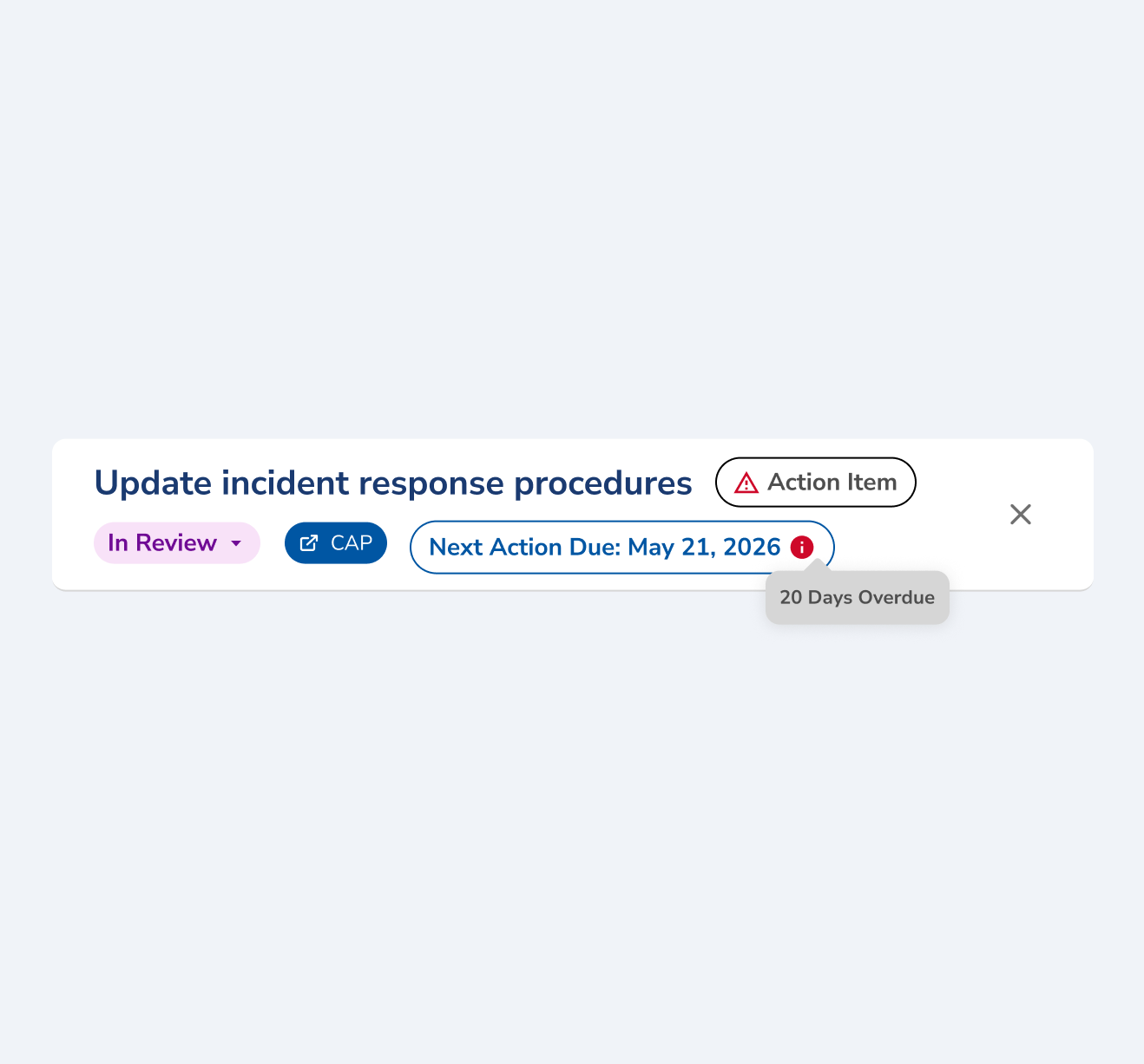
An action item titled Update incident response procedures, linked to a CAP and marked In Review, with a Next Action Due date of May 21, 2026 and a tooltip reading 20 Days Overdue.

Contributing Factors on the Record

What went wrong and what was done about it tends to live in a paragraph nobody can sort. The case asks for contributing factors and immediate actions as required, selectable fields, with the supporting documents attached beside them. Your investigators start from structured facts instead of a narrative.
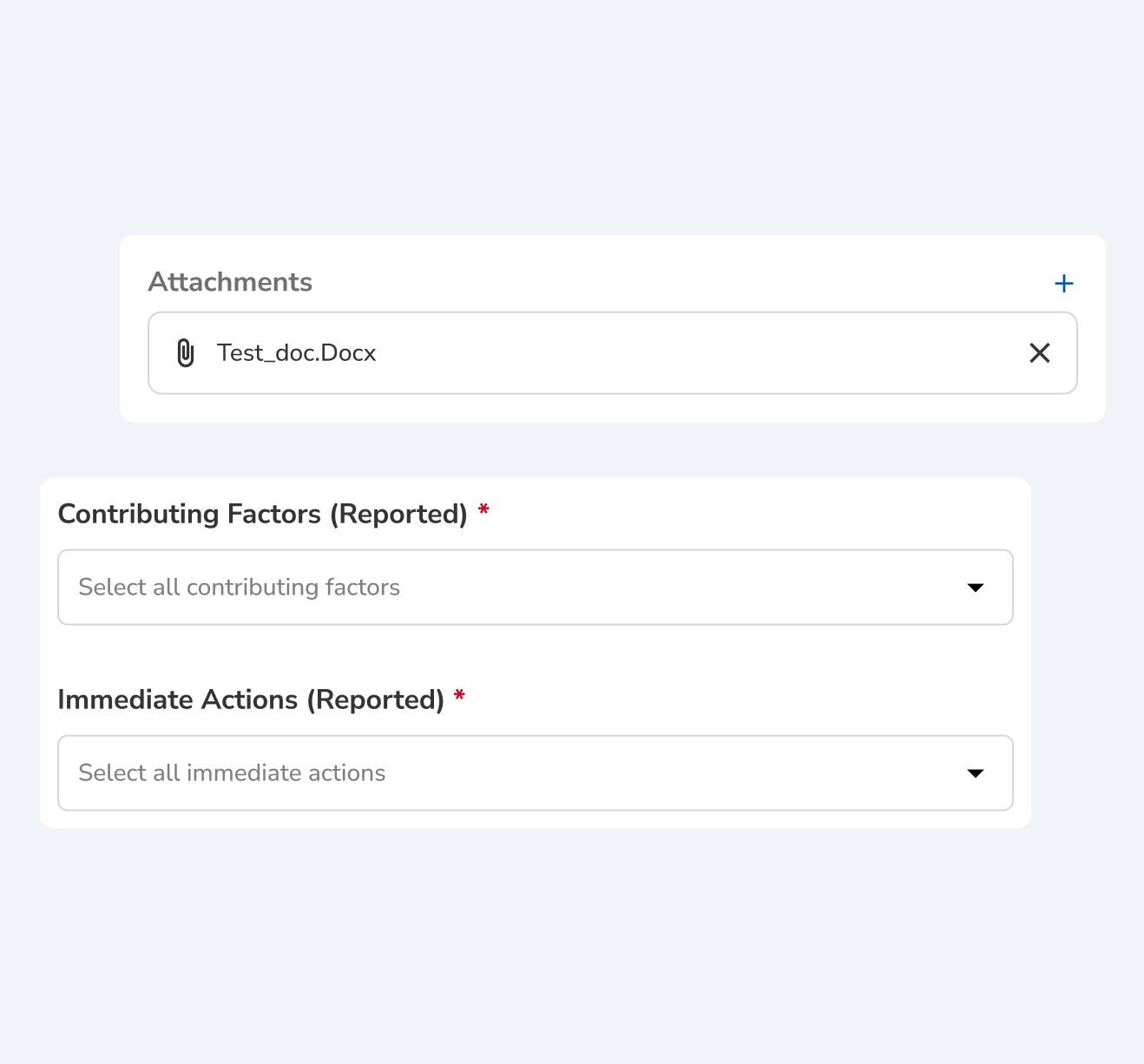
An attachments panel holding one document, above two required dropdowns labeled Contributing Factors (Reported) and Immediate Actions (Reported).

How Clara AI Enhances
Incident Management

Clara does the reading. She summarizes a case from its own record, assembles the closure summary as a case is resolved, and counts down against the deadlines you configured. She proposes; your risk team decides, and every decision keeps a name on it.

Drafts the Case Summary
Assembles the Closure Summary
Watches the Clock
Proposes Contributing Factors