All frameworks

Accreditation

ISO 9001: The Quality Management Backbone of DNV Accreditation

ISO 9001 is the internationally recognized standard for quality management systems (QMS), not healthcare-specific, but a general framework for how an organization plans, controls, measures, and continuously improves its processes.

4th surveywhen DNV states hospitals achieve ISO 9001 certification, at the end of their fourth annual survey.DNV: NIAHO accreditation for hospitals
AnnualDNV surveys, at which progress toward ISO 9001 conformance is assessed across the accreditation cycle.DNV: NIAHO accreditation for hospitals
Built inISO 9001 is part of NIAHO itself: DNV describes the program as combining CMS-aligned Conditions of Participation content with an ISO 9001-based quality management framework.DNV: Hospital accreditation – NIAHO & DIAS programs

What ISO 9001 Adds to Hospital Accreditation

DNV Healthcare built its NIAHO hospital accreditation program on top of ISO 9001 principles rather than alongside them: DNV describes NIAHO as combining CMS-aligned Conditions of Participation content with an ISO 9001-based quality management framework, and extends the same model internationally through its DIAS (DNV International Accreditation Standard) program for hospitals outside the U.S. (DNV: Hospital accreditation – NIAHO & DIAS programs).

How the ISO 9001 Requirement Actually Works

Rather than requiring full ISO 9001 certification on day one, DNV phases the requirement in across a hospital's accreditation cycle, assessing progress at each annual survey; DNV states that hospitals achieve ISO 9001 certification at the end of their fourth annual survey (DNV: NIAHO accreditation for hospitals). Notably, a hospital that does not reach full ISO 9001 conformance on that schedule does not automatically lose its underlying NIAHO accreditation or CMS deemed status: it loses the separate ISO 9001 certification component, while NIAHO accreditation itself continues.

Why ISO 9001 Belongs in Your Quality Management System

Even outside a DNV survey context, ISO 9001's process-based discipline, document control, defined roles and responsibilities, objective evidence of corrective action, and management review of quality data is close to the operational core of any hospital QMS. For DNV-accredited hospitals, ISO 9001 conformance isn't optional: DNV builds it into the accreditation itself, and hospitals either demonstrate it during survey or hold certification through an accredited registrar. Either way, your CAPA process, document control practices, internal audit program, and management-review cadence need to produce evidence an ISO assessor will actually recognize, not just evidence that satisfies an internal checklist. Building your QMS around ISO 9001's structure from the start avoids a scramble later in the cycle when the external assessment clock runs out.

Build a QMS That's Already ISO-Ready

See how Medlaunch bakes ISO 9001 discipline into your everyday document control, audits, and CAPA process. Request a walkthrough.
In the platform

How Medlaunch handles it

Every claim below is a screen you can open in a demo.

01

Quality Core built on the ISO 9001 process model

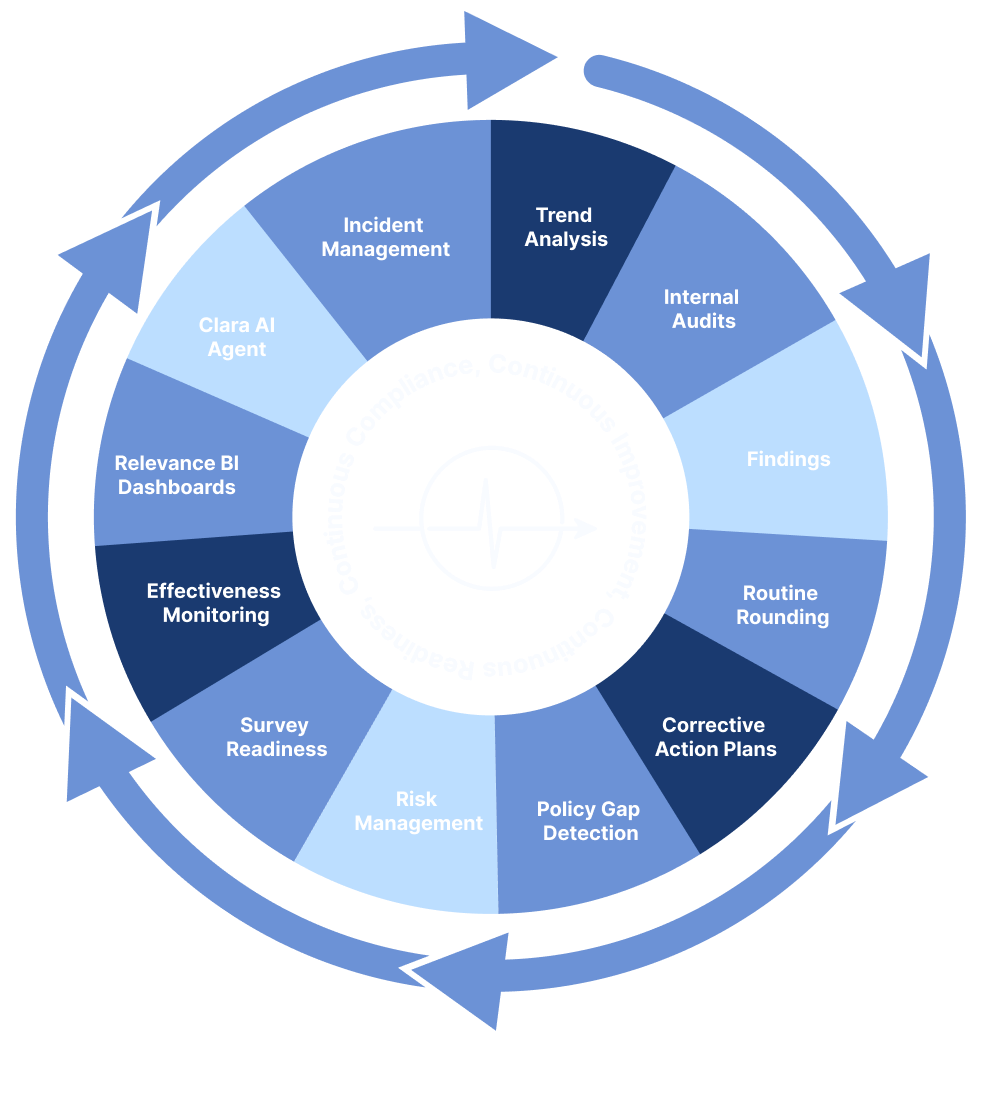
Medlaunch structures the core mechanics of Quality Core, including document control in My Policy, the CAPA/ticket lifecycle, internal audits, and management-review reporting, around ISO 9001's process-based model, so the evidence your teams generate day-to-day (approvals, revision history, corrective-action tracking, closure verification) is already in the shape an ISO assessor expects.

Circular process diagram ringed by arrows turning clockwise, captioned "Continuous Compliance, Continuous Improvement, Continuous Readiness". Twelve segments run around the centre: trend analysis, internal audits, findings, routine rounding, corrective action plans, policy gap detection, risk management, survey readiness, effectiveness monitoring, Relevance BI dashboards, Clara AI agent, and incident management.

02

Document control that satisfies the clause natively

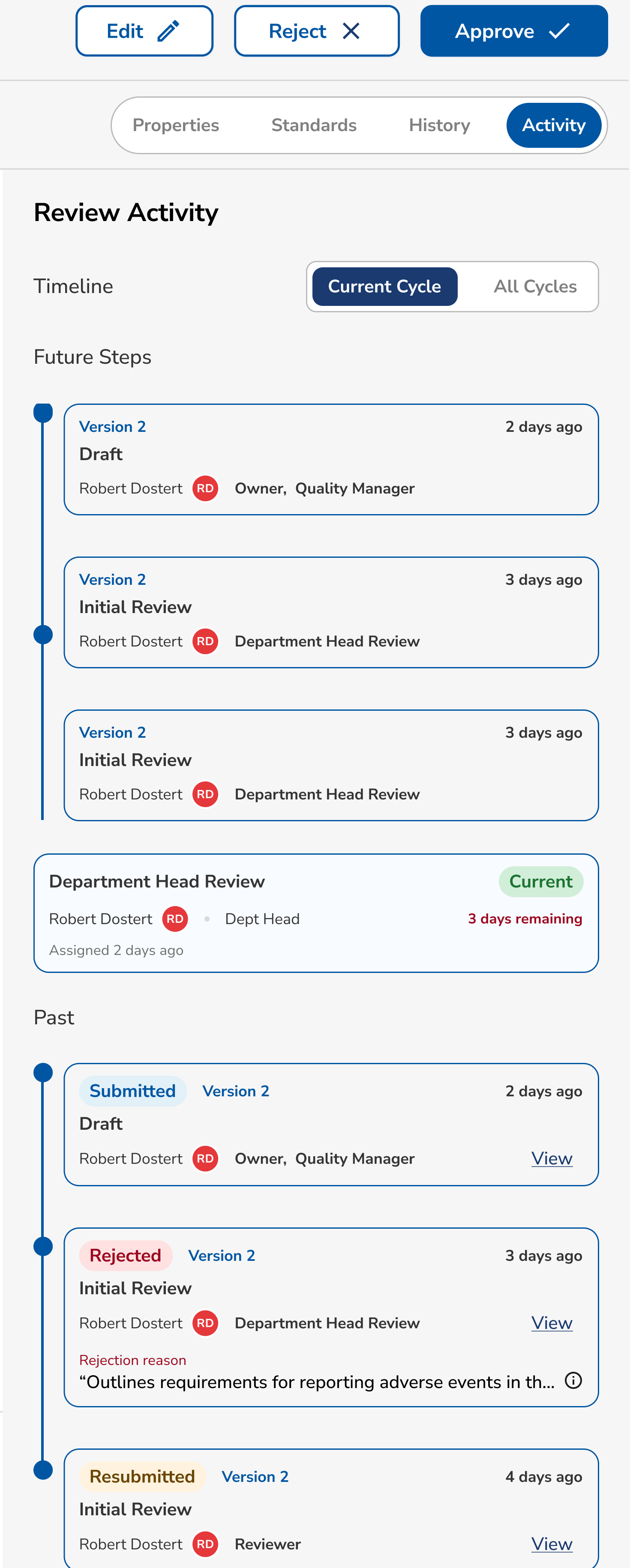
Policies in My Policy are version-controlled with full approval and revision trails, satisfying ISO 9001's document-control clauses natively rather than through a bolt-on export.

Light policy detail view, Activity tab: a version-2 policy's review timeline showing linked steps, draft, initial review, department-head review in progress with days remaining, and below it the past cycle with a rejection and its reason, then a resubmission.

03

Stage 1 / Stage 2 readiness as a standing report

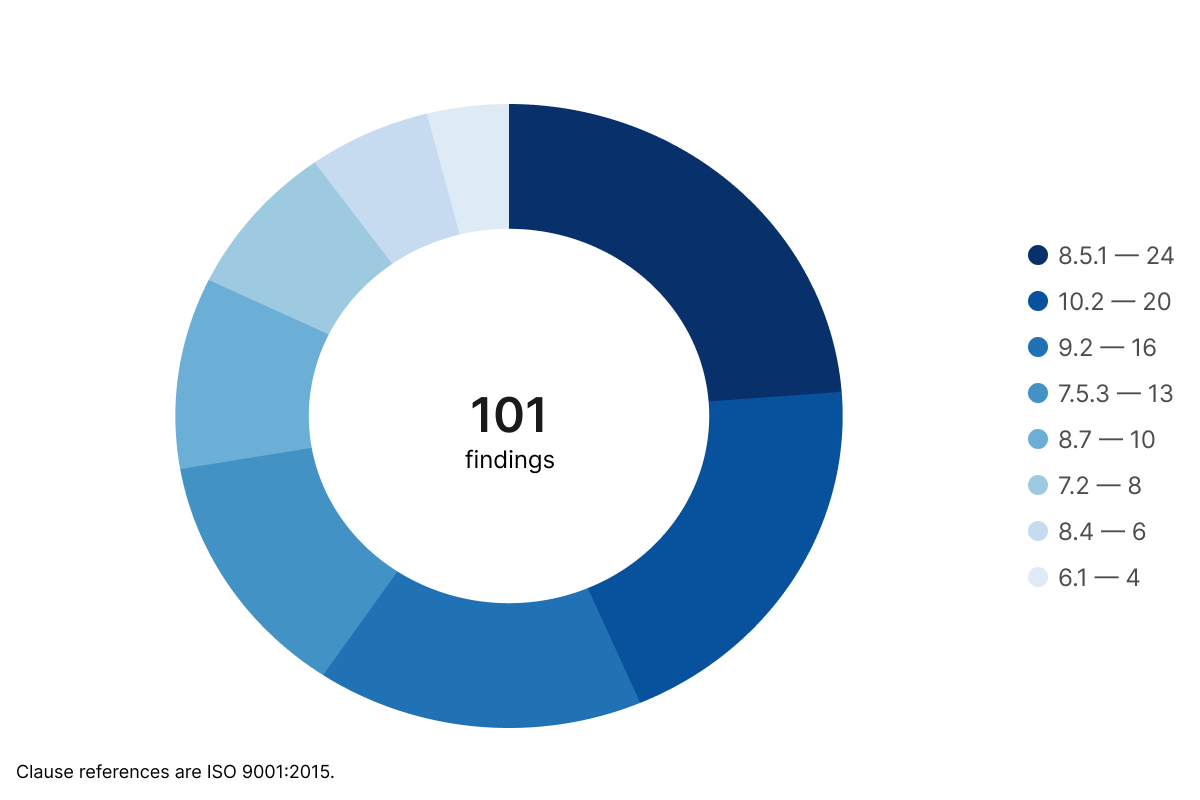
Audit findings and CAPAs are tagged to the ISO 9001 clause and related NIAHO chapter they touch, so Relevance BI can show your progress toward Stage 1/Stage 2 readiness, CAPA closure rates, recurring nonconformity themes, and overdue corrective actions as a standing report rather than a pre-survey fire drill.

Light donut chart: 101 findings broken down by ISO 9001:2015 clause reference, with a legend giving each clause and its count, 8.5.1 (24), 10.2 (20), 9.2 (16), 7.5.3 (13), 8.7 (10), 7.2 (8), 8.4 (6), 6.1 (4).

04

Notified when the ISO 9001 requirement changes

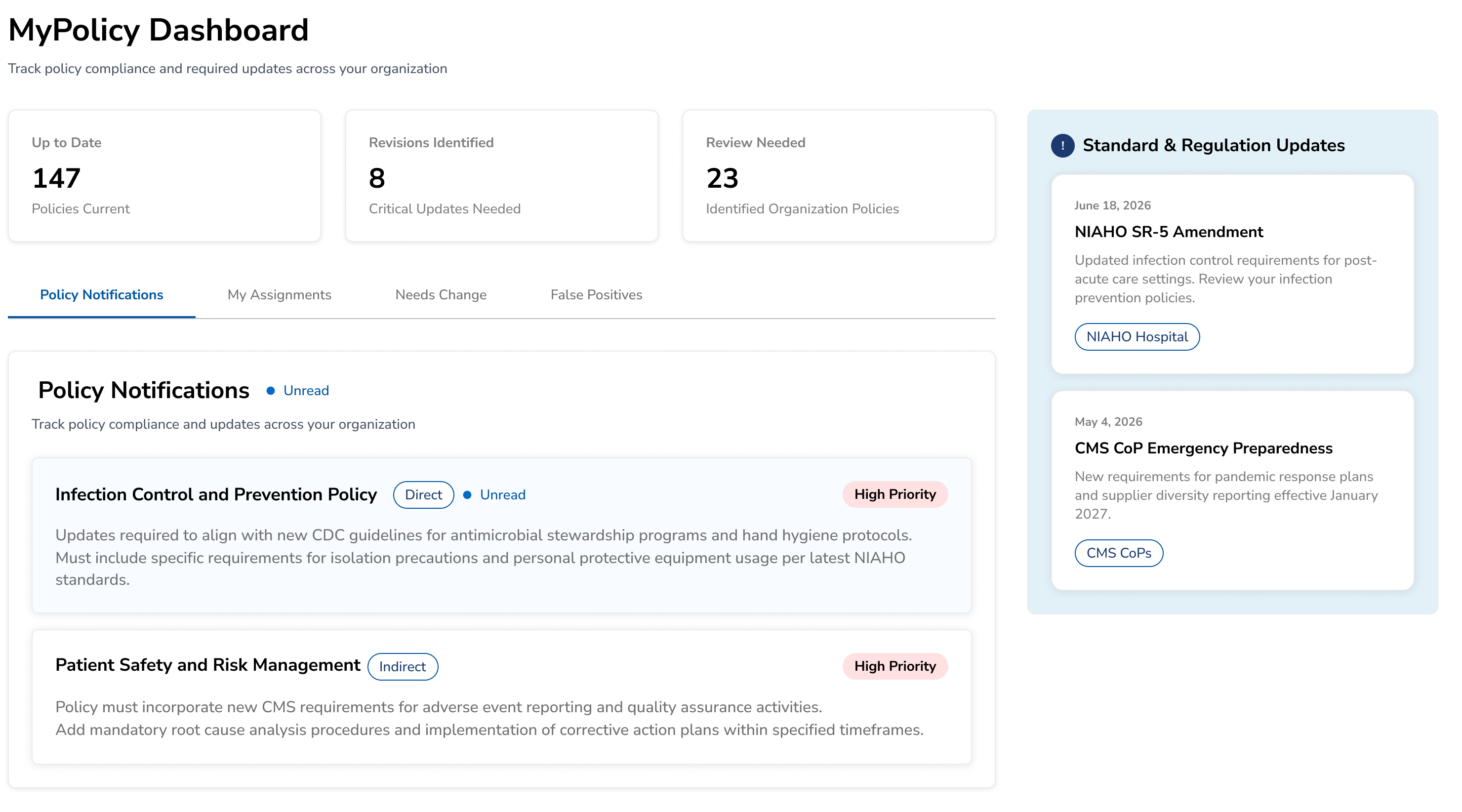
When ISO revises 9001 or DNV updates how it assesses conformance, Medlaunch notifies you that the standard changed and flags exactly which policies and audit tools it affects, tagged Direct or Indirect and prioritized, so they get reviewed before your next assessment, not after a nonconformity.

Dark policy notifications dashboard: stat tiles for 147 policies current, 8 critical updates needed, and 23 needing review; a Standard & Regulation Updates panel with dated cards like a NIAHO SR-5 Amendment; and a Policy Notifications list tagging affected policies Direct/Indirect and High Priority.

See it running on your standards.

Book a demo and we will walk through Medlaunch against the frameworks you are surveyed on and the facilities you actually run.

Book a Demo