Survey prep is a scramble
The pain shows up predictably. Survey prep turns into a scramble in the weeks before a DNV NIAHO or CMS visit, because nobody has been tracking readiness continuously, they've been running the facility.
Healthcare Organization Size
One facility. One team wearing five hats. Medlaunch gives a standalone site enterprise-grade quality infrastructure without an enterprise-grade headcount.
What breaks first
The pain shows up predictably. Survey prep turns into a scramble in the weeks before a DNV NIAHO or CMS visit, because nobody has been tracking readiness continuously, they've been running the facility.
Policies drift out of date because review cycles depend on one person remembering.
CAPAs get opened in a spreadsheet and quietly lose momentum.
And if that one indispensable person leaves, the facility doesn't just lose a role, it loses the institutional memory of how compliance actually works here.
At a single facility (a hospital, ASC, behavioral health center, or specialty clinic), compliance and quality usually live with one person, or one small team, alongside a dozen other responsibilities. The quality director might also be the risk manager, the safety officer, and the person fielding infection control questions. There's no dedicated informatics team building dashboards and no corporate compliance office setting standards from above. Evidence lives wherever it landed: shared drives, three-ring binders, someone's inbox, a spreadsheet only one person really understands.
A single site doesn't need less rigor than a large system, it needs the same discipline in a form one team can actually sustain. ISO-aligned quality management gives a small facility real structure: a defined document control process, a repeatable internal audit and rounding cadence, a consistent way to score and close CAPAs, and a management-review rhythm that catches drift before a surveyor does. The value isn't bureaucracy, it's that quality stops depending on any one person's memory and starts living in a system the whole team can rely on, including the next person who takes the role.
Because policies, audits, findings, and CAPAs live in one connected system all year, survey prep stops being a project. Instead of pulling files and rebuilding evidence packets by hand, the facility runs a survey readiness report from Relevance BI, current, complete, and ready whenever the surveyor walks in.
Talk to Medlaunch about what a single-site rollout looks like, and how the system grows with you if you ever add a second location.
In the platform
Every claim below is a screen you can open in a demo.
01
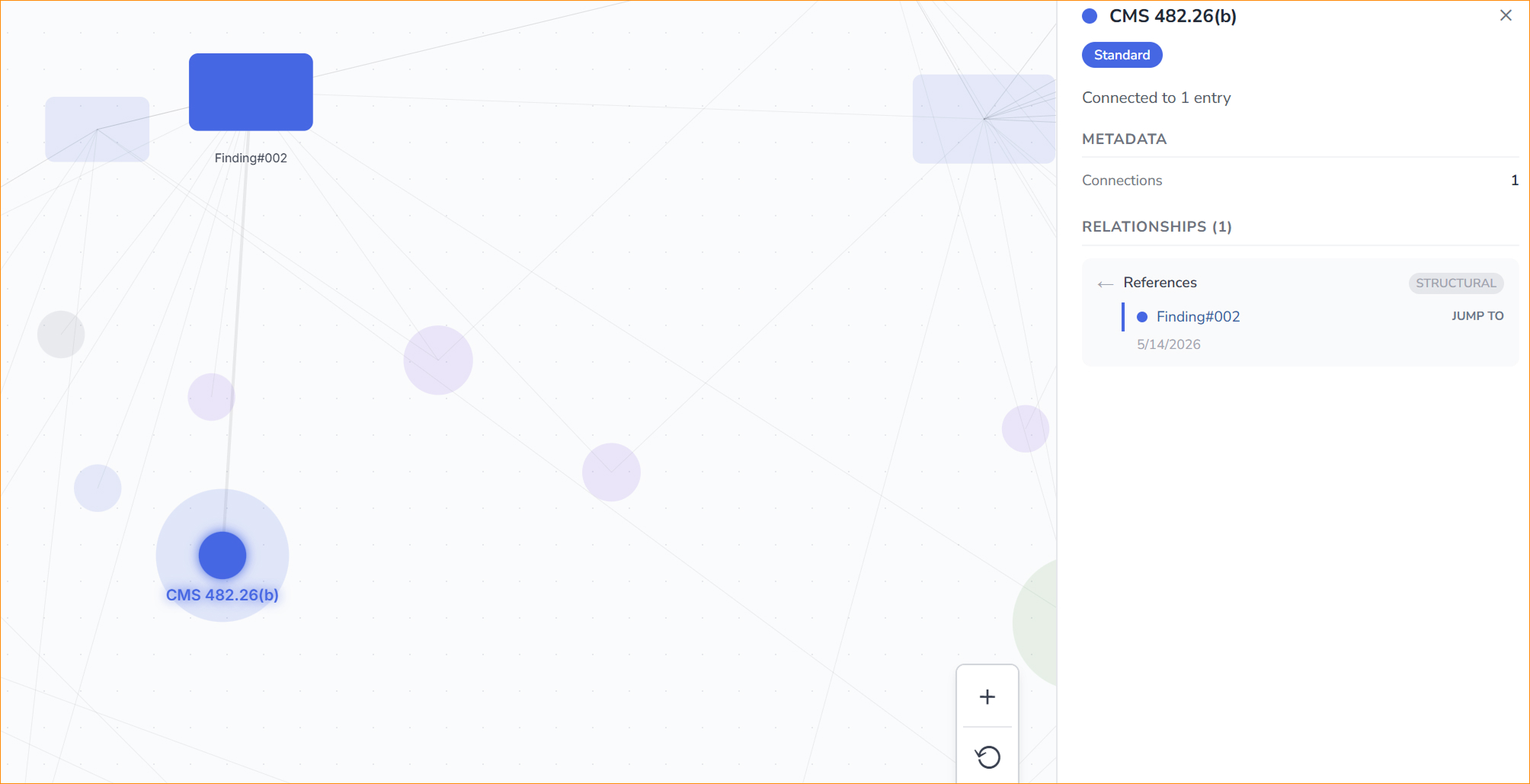
Medlaunch replaces the binder-and-spreadsheet stack with one connected system. The ontology layer means a policy in MyPolicy, a finding from a Quality Core round, and a CAPA opened to fix it are all the same underlying record, traceable back to the exact standard it satisfies, DNV NIAHO, a CMS Condition of Participation, a state requirement. Nothing gets tracked twice, and nothing falls through a seam between tools.
02
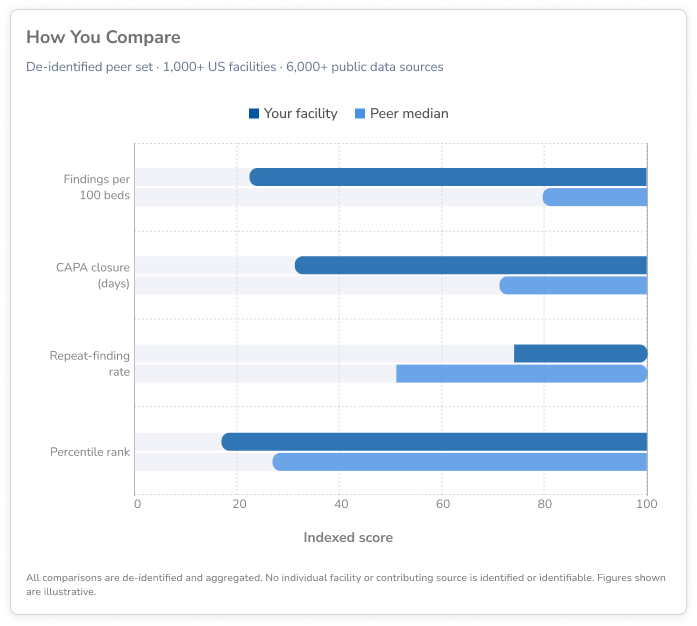
Even at one site, benchmarking already works in your favor: Relevance BI shows whether your facility's finding volume, closure times, and repeat-finding rate are normal for a facility your size and type, or an outlier worth a closer look, context no single team could ever build from its own numbers alone, and it only gets sharper as the network grows. Add a second site later, and it inherits that same compounding history from day one.
03
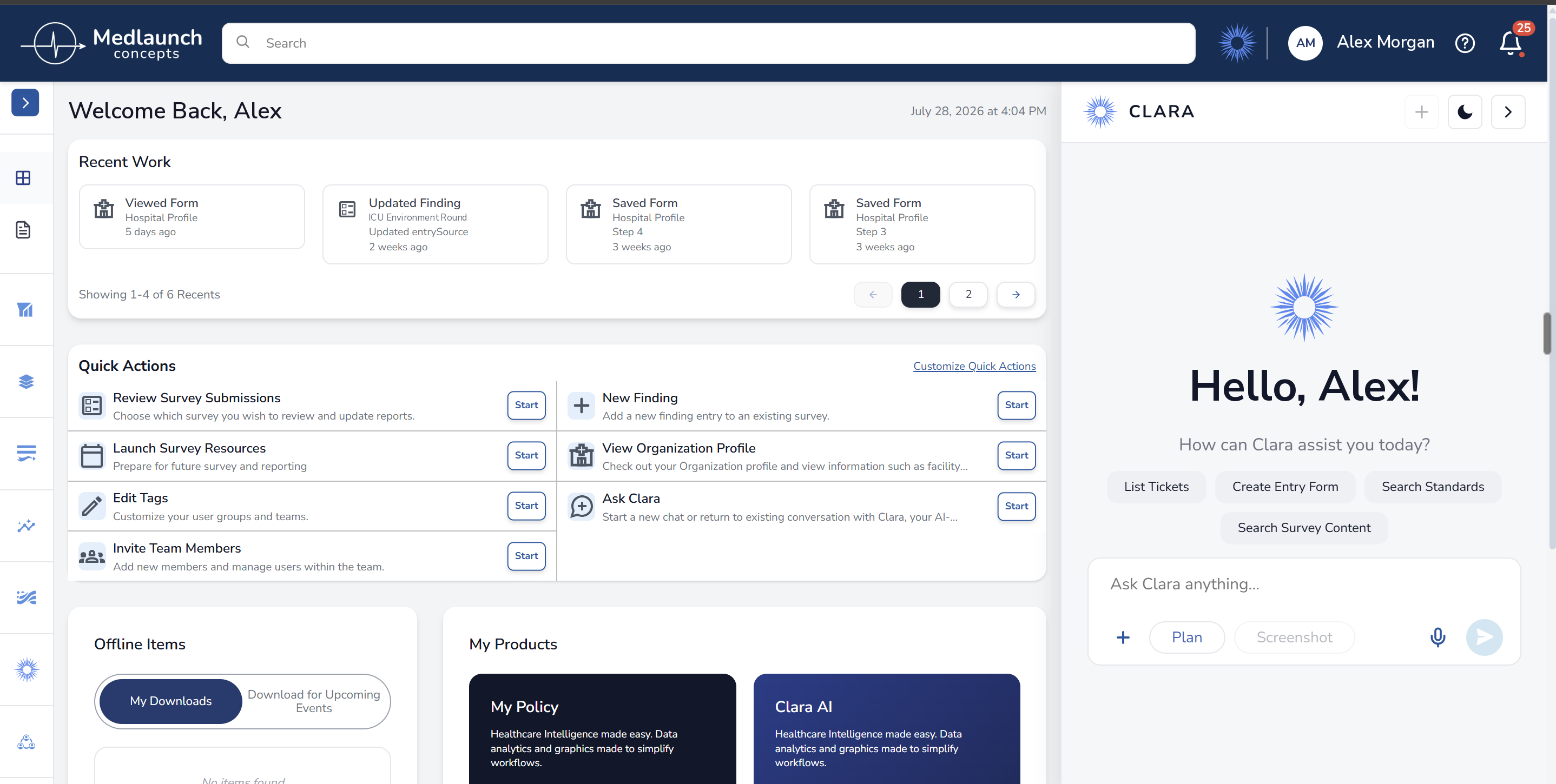
The platform is built for the person actually using it, not a compliance officer with a dedicated analytics team, but someone doing this alongside patient care operations. That's where Clara matters most: an assistant available right on the dashboard, ready to help with findings, ticket details, CAPA routing, and the reminders that a one-person compliance function doesn't have time to chase manually.
Related
The next rung on the ladder, where compliance becomes a coordination problem across five to ten facilities.
Read more →The structure a single site is actually adopting when it standardises document control, audits, and CAPAs.
Read more →How DNV NIAHO standards map into the standards library your findings and evidence reference.
Read more →