All frameworks

Accreditation

NIAHO Standards: Building Your Quality Management System on DNV's Framework

The National Integrated Accreditation for Healthcare Organizations (NIAHO) program is DNV Healthcare's hospital accreditation standard, deemed by CMS as an alternative to state survey for demonstrating compliance with the Medicare Conditions of Participation (CoPs).

32chapters/sections in DNV's NIAHO requirements for hospitals, spanning governance, clinical service, and operational functions, and containing 183 subsections that go deeper into the specific standard requirements.DNV NIAHO Accreditation Requirements manual (hospital program)
AnnualDNV surveys of accredited hospitals, rather than a single triennial visit.DNV: NIAHO accreditation for hospitals
3 yearsaccreditation cycle, subject to that ongoing oversight.DNV: NIAHO accreditation for hospitals

What Is NIAHO?

Unlike accreditors that publish standards as a separate philosophy, DNV built NIAHO to track the CoPs section-by-section while layering in ISO 9001 quality management principles and a small number of DNV-specific chapters, such as Security Management, that go beyond what CMS requires.

NIAHO by the Numbers

DNV's NIAHO requirements for hospitals run to 32 chapters/sections, spanning governance and administrative functions, clinical services, and operational functions, broken down further into 183 subsections that spell out the specific standard requirements. One manual carries the requirements, interpretive guidelines, and surveyor guidance for both hospitals and critical access hospitals. DNV surveys accredited hospitals annually rather than through a single triennial visit, and accreditation itself runs on a three-year cycle subject to that ongoing oversight (DNV: NIAHO accreditation for hospitals). Individual chapters are revised on their own schedule, for example, DNV's Revision 25-0/25-1 update to the Physical Environment (PE) chapter added an alignment requirement to CMS's Emergency Preparedness rule (Appendix Z) and clarified that Security Management (PE.4) remains a DNV-only requirement not found in the CMS CoPs: it adopts NFPA 99 Chapter 13, which CMS expressly excludes for hospitals under 42 CFR 482.41(c)(1) (HFM Magazine).

Why NIAHO Belongs in Your Quality Management System

If your hospital is DNV-accredited, NIAHO isn't optional context, it is your deemed status pathway with CMS. But even organizations that don't use DNV as their accreditor benefit from tracking NIAHO's structure: because its chapters are built as a direct crosswalk to the CoPs, NIAHO gives quality teams a ready-made way to organize CoP compliance work by functional area instead of by regulation number. For DNV clients specifically, NIAHO carries the added weight of ISO 9001: hospitals are expected to move toward ISO 9001 conformance over the first accreditation cycle, meaning your QMS needs to produce objective, auditable evidence of continuous improvement, not just pass/fail compliance snapshots.

Get Standards-Ready

See how Medlaunch turns the NIAHO chapter structure into a living part of your daily compliance workflow, request a walkthrough.

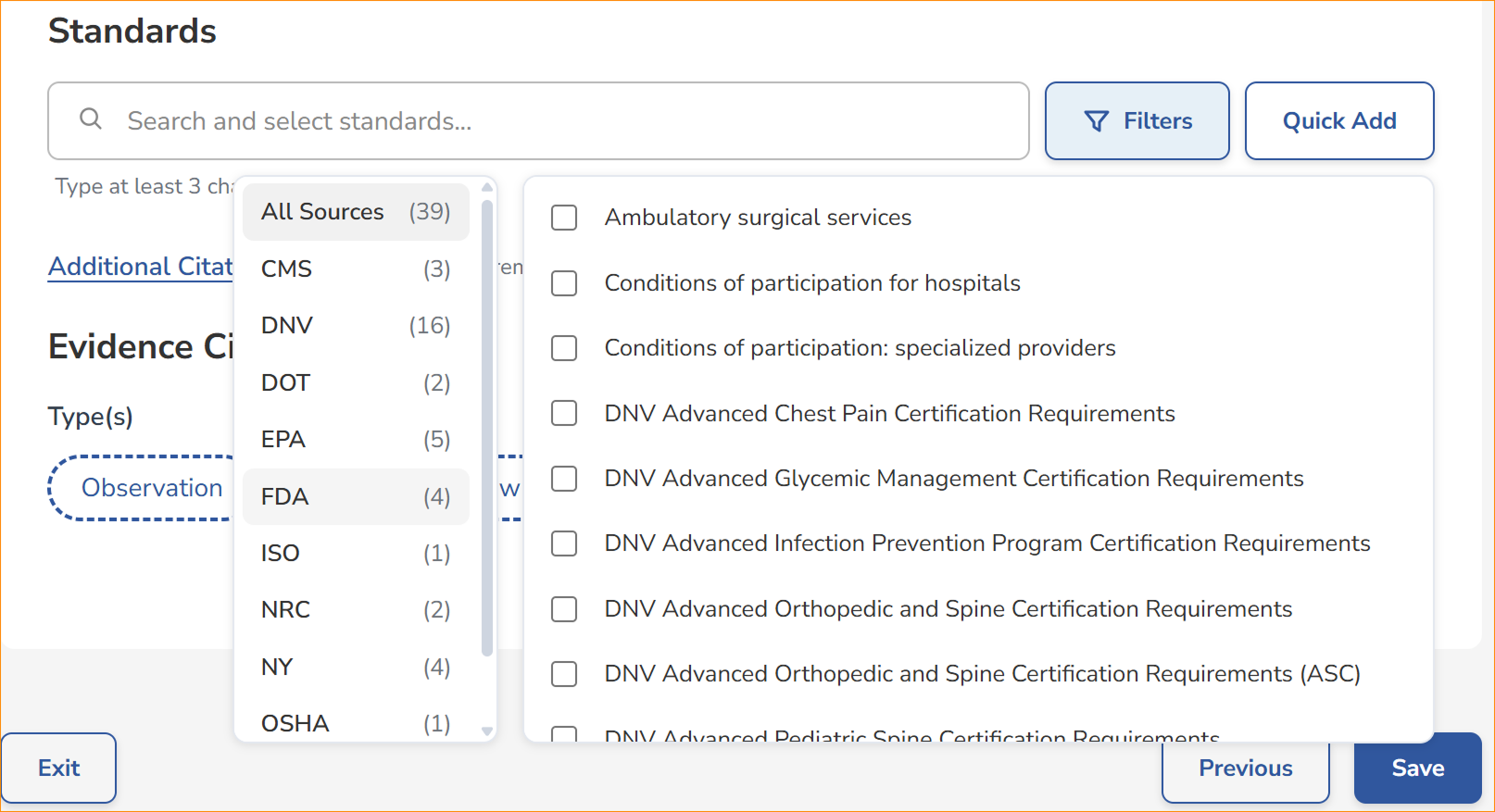
Light standards picker: a source filter (All Sources, 39, including CMS, DNV, DOT, EPA, FDA, ISO, NRC, NY, OSHA) beside a checkbox list of individual standards to select.

In the platform

How Medlaunch handles it

Every claim below is a screen you can open in a demo.

01

The NIAHO standards library, embedded in your audit tools

Medlaunch gives you a dynamically mapped library of standards inside Quality Core, including the full NIAHO chapter structure, with similarity search, keyword search, and the ability to search across all standards at the same time, so audit tools, rounding checklists, and CAPA templates are built directly against current chapter and standard numbers rather than freehand text.
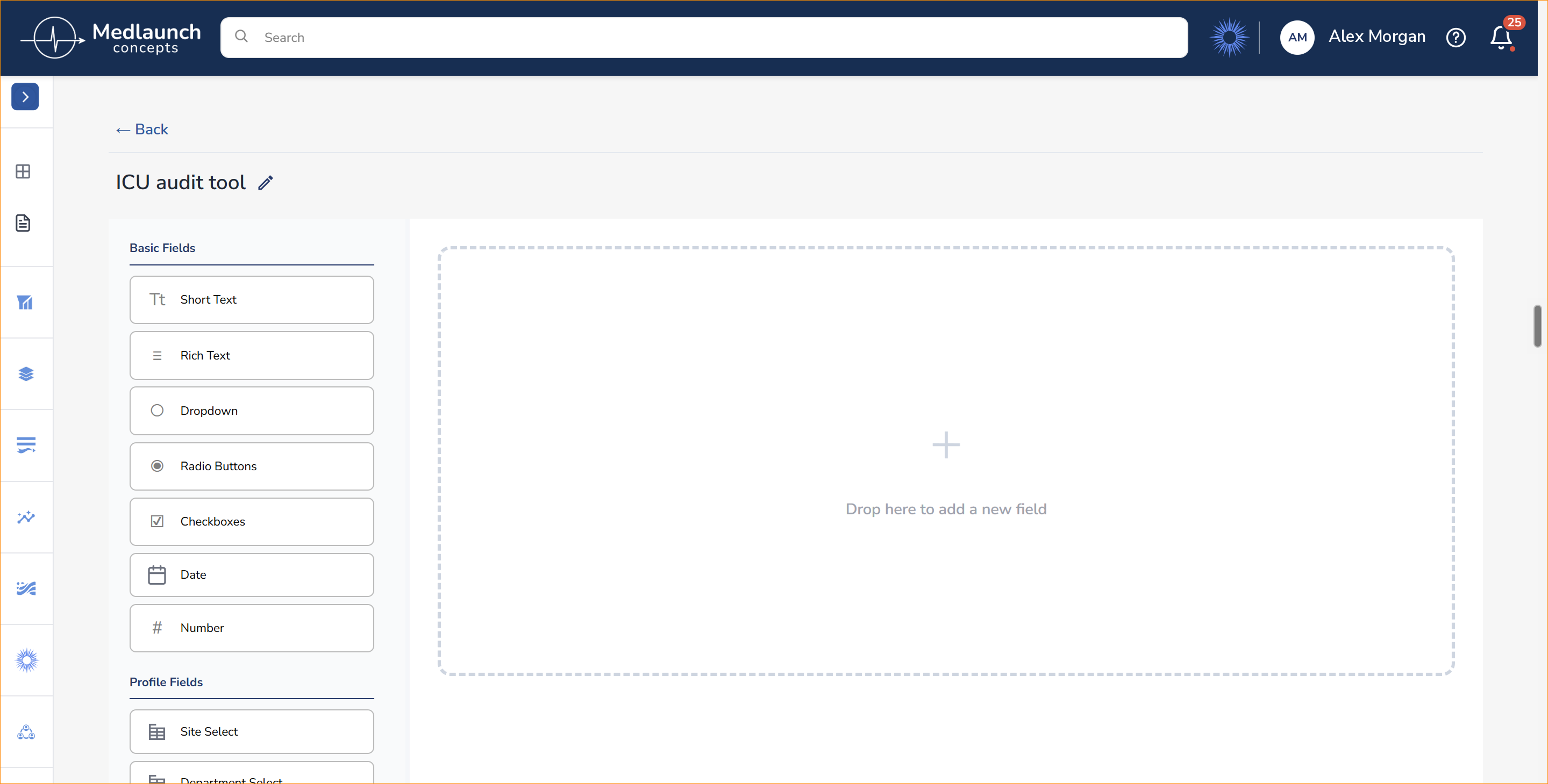
Light form builder in an empty canvas state: an "ICU audit tool" with a left-hand palette of field types (Short Text, Rich Text, Dropdown, Radio Buttons, Checkboxes, Date, Number, Site Select) and a "Drop here to add a new field" drop zone.

02

Findings tagged to the standard, statistics broken out by it

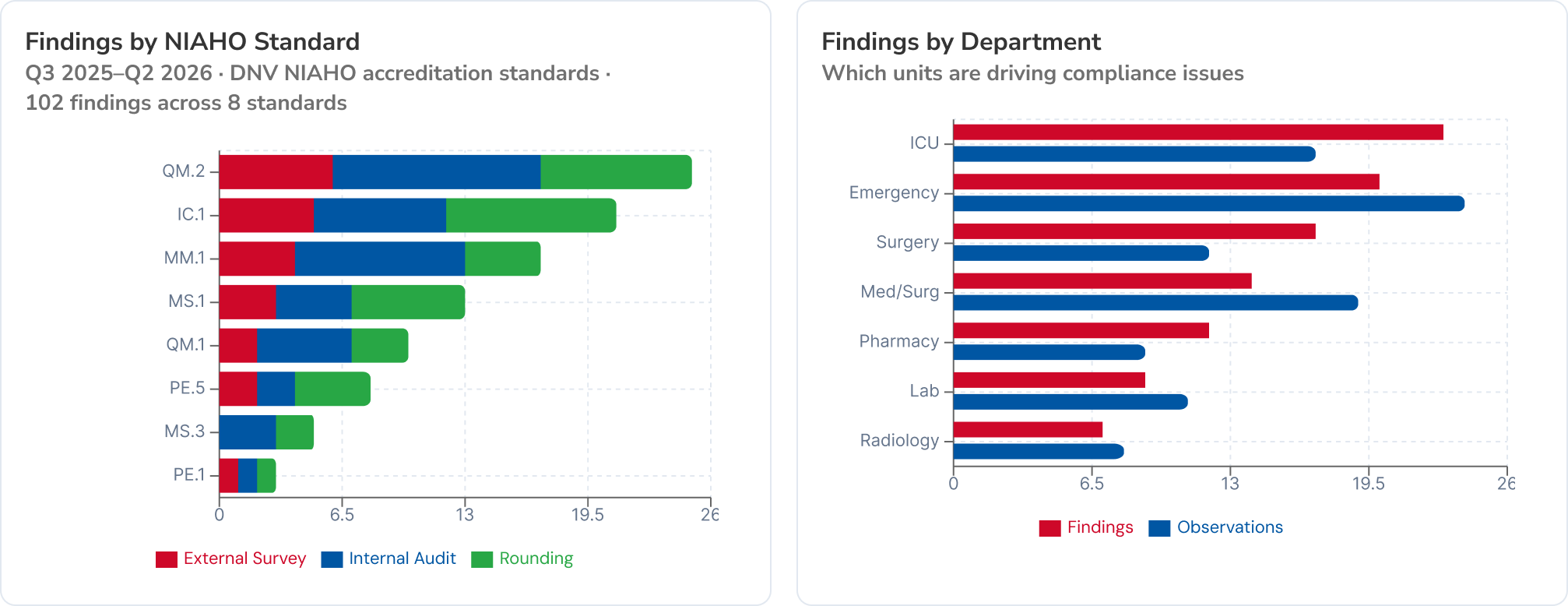
Every finding logged through an audit, round, or ticket can be tagged to the specific NIAHO chapter and standard it relates to, which means Relevance BI can break out your survey-readiness reports and trending statistics by standard, showing, for instance, which PE or QM sub-requirements generate the most recurring findings.

Light two-panel report crop: findings by NIAHO standard (e.g. QM.2, IC.1, MM.1) beside findings by department (ICU, Emergency, Surgery, and others), both segmented by source (External Survey, Internal Audit, Rounding).

03

Policies mapped to the standards they satisfy

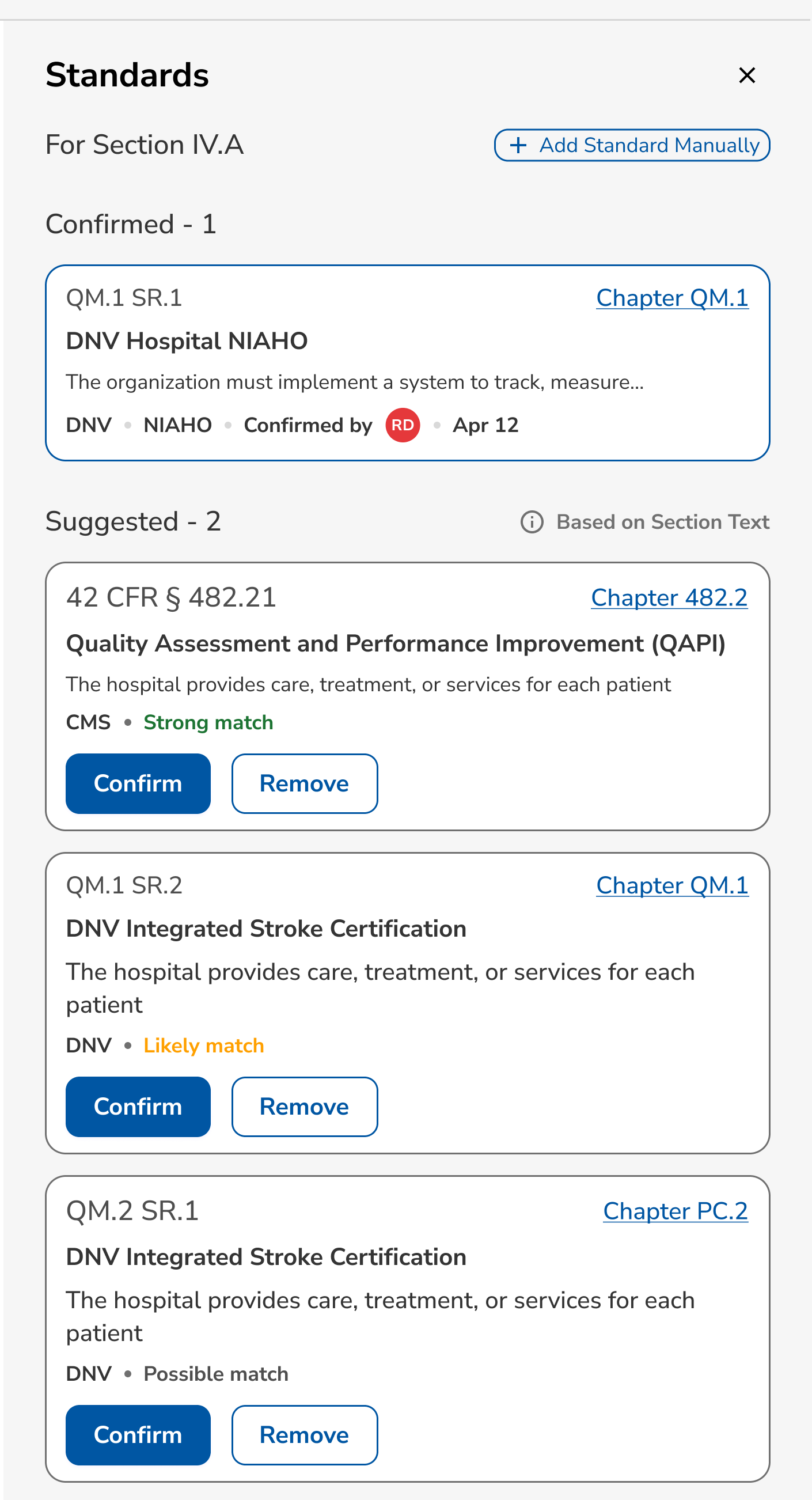
In My Policy, individual policies and procedures are mapped to the NIAHO standards they satisfy, so a surveyor question about a specific chapter resolves instantly to the governing document and its revision history.

Light Standards panel for a policy section: one Confirmed standard and two Suggested standards, each showing its source (CMS, DNV) and a match-confidence label (Strong/Likely match) with Confirm/Remove actions.

04

Notified when DNV revises a NIAHO chapter

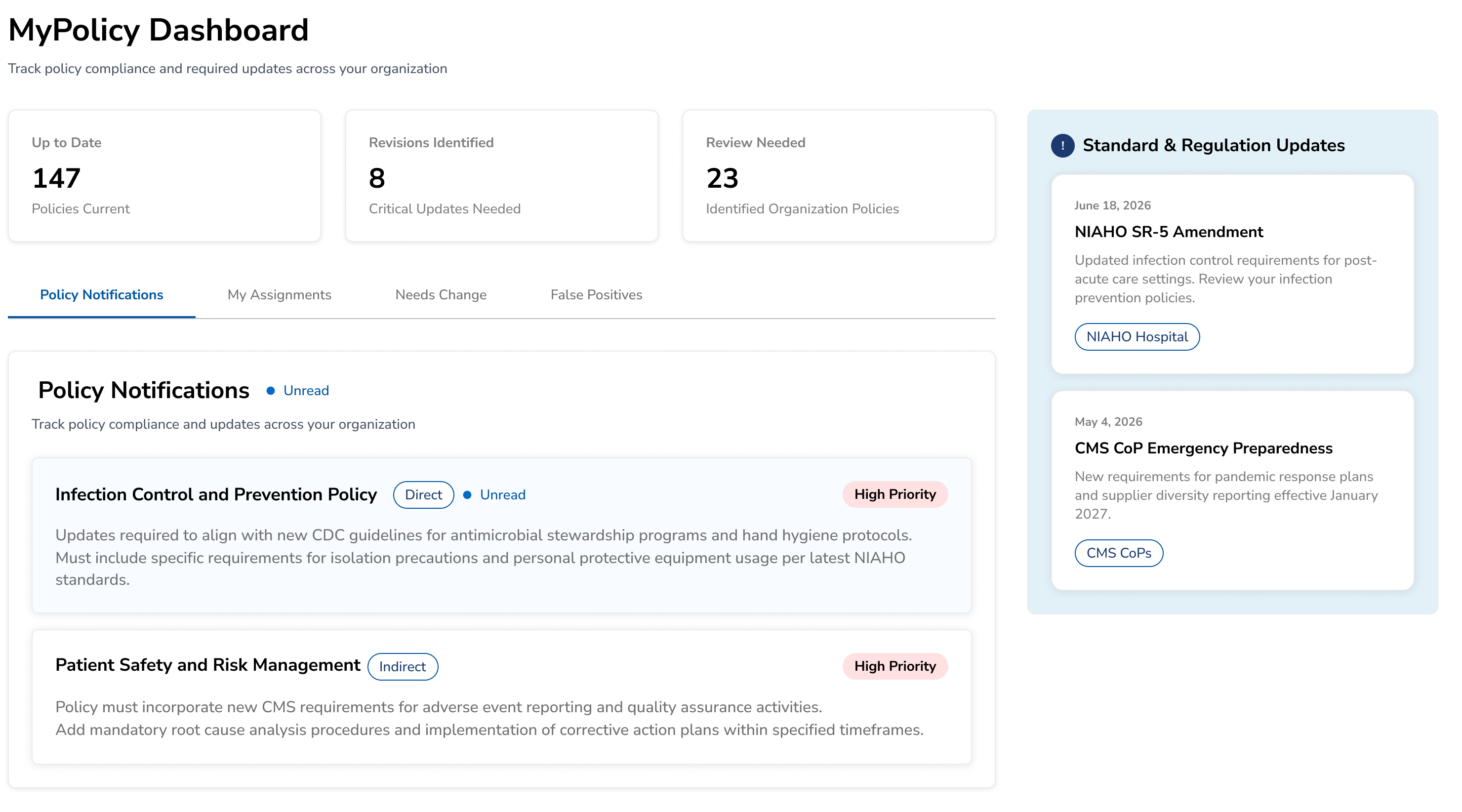
When DNV publishes a NIAHO revision (a SR-5 Amendment to the infection control chapter, say), Medlaunch notifies you that the standard changed and flags exactly which policies it affects, like your Infection Control and Prevention Policy, tagged Direct and flagged High Priority, so it gets reviewed before the next survey, not after a finding.

Dark policy notifications dashboard: stat tiles for 147 policies current, 8 critical updates needed, and 23 needing review; a Standard & Regulation Updates panel with dated cards like a NIAHO SR-5 Amendment; and a Policy Notifications list tagging affected policies Direct/Indirect and High Priority.

See it running on your standards.

Book a demo and we will walk through Medlaunch against the frameworks you are surveyed on and the facilities you actually run.

Book a Demo