All frameworks

Regulatory

CMS Tags: Translating Survey Citations Into Actionable Compliance Data

"Tags" are the reference codes CMS surveyors use to cite a specific regulation during a survey, drawn from the interpretive guidelines in the CMS State Operations Manual.

A-tagsHospitals, cited from State Operations Manual, Appendix A.CMS State Operations Manual, Appendix A (hospitals)
C-tagsCritical access hospitals.CMS State Operations Manual, Appendix W (critical access hospitals and swing-beds)
Q-tagsAmbulatory surgical centers, among other facility types.CMS State Operations Manual, Appendix L (ambulatory surgical centers)
A-0700An example physical-environment citation: the tag names the exact regulation and interpretive guideline a finding falls under.CMS State Operations Manual, Appendix A (§482.41 Physical Environment)

What CMS Tags Are

Each tag maps to one requirement within a facility type's Conditions of Participation or Conditions for Coverage: hospitals are cited under A-tags (State Operations Manual, Appendix A), critical access hospitals under C-tags, and ambulatory surgical centers under Q-tags, among others (State Operations Manual Appendix A, CMS; Appendix W, CMS; Appendix L, CMS). A tag like A-0700 (referenced as an example of a physical-environment citation) tells you not just that a facility was cited, but exactly which regulation and interpretive guideline the finding falls under, which is what makes tags useful as an organizing structure for compliance work, not just a survey artifact.

Reporting Requirements Tied to Tags

2 working daysFor the state agency to notify the provider in writing and certify immediate jeopardy to the CMS regional office, starting a 23-day termination clock.State Operations Manual Chapter 3 §3010B, CMS

Tags themselves aren't a reporting deadline: they're the citation structure a surveyor uses when documenting a deficiency during or after a survey. But the underlying regulations they point to often carry hard reporting and correction deadlines: for example, a hospital cited with a condition-level deficiency (versus a standard-level deficiency) must submit an acceptable Plan of Correction (PoC) within a CMS-specified window (State Operations Manual Appendix A, CMS), and an immediate-jeopardy finding starts a two-working-day clock for the state agency to telephone the CMS regional office and notify the provider in writing, after which a rapid abatement plan is what stands between the facility and termination of its Medicare provider agreement (State Operations Manual Chapter 3 §3010B, CMS). Because every citation traces to a specific tag, tracking outstanding PoCs by tag number is the standard way survey and quality teams manage post-survey remediation.

Turn Survey Citations Into a Managed Workflow

See how Medlaunch's rule builder and Clara keep tag-level findings moving from identification to closure. Request a walkthrough.

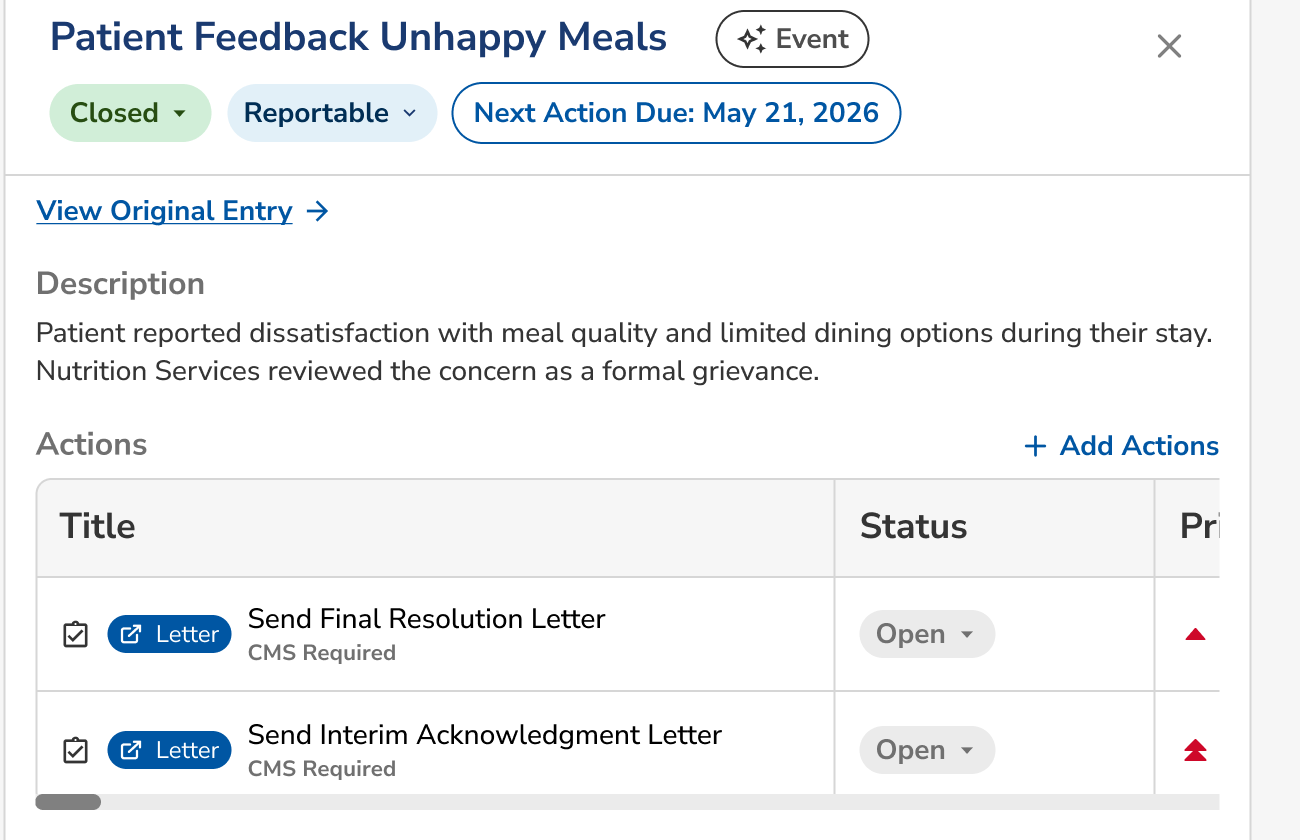
Light reportable-event detail panel: a patient-feedback event with Closed and Reportable status badges and a "Next Action Due" date badge, beside an Actions table of CMS-required follow-up letters and their status.

In the platform

How Medlaunch handles it

Every claim below is a screen you can open in a demo.

01

Rules that encode the regulation behind the tag

Medlaunch's rule builder lets your organization encode the regulatory logic behind CMS tags, and your own internal policies for responding to them, directly into the platform. When an internal audit, round, or incident review surfaces a finding that maps to a specific tag (say, an A-tag under the Infection Control or Physical Environment CoP), a rule can automatically generate a corrective action plan with a due date, assign it to the accountable owner, and escalate it if the deadline is at risk, mirroring the same discipline CMS expects in a formal Plan of Correction, but running continuously instead of only after a survey.
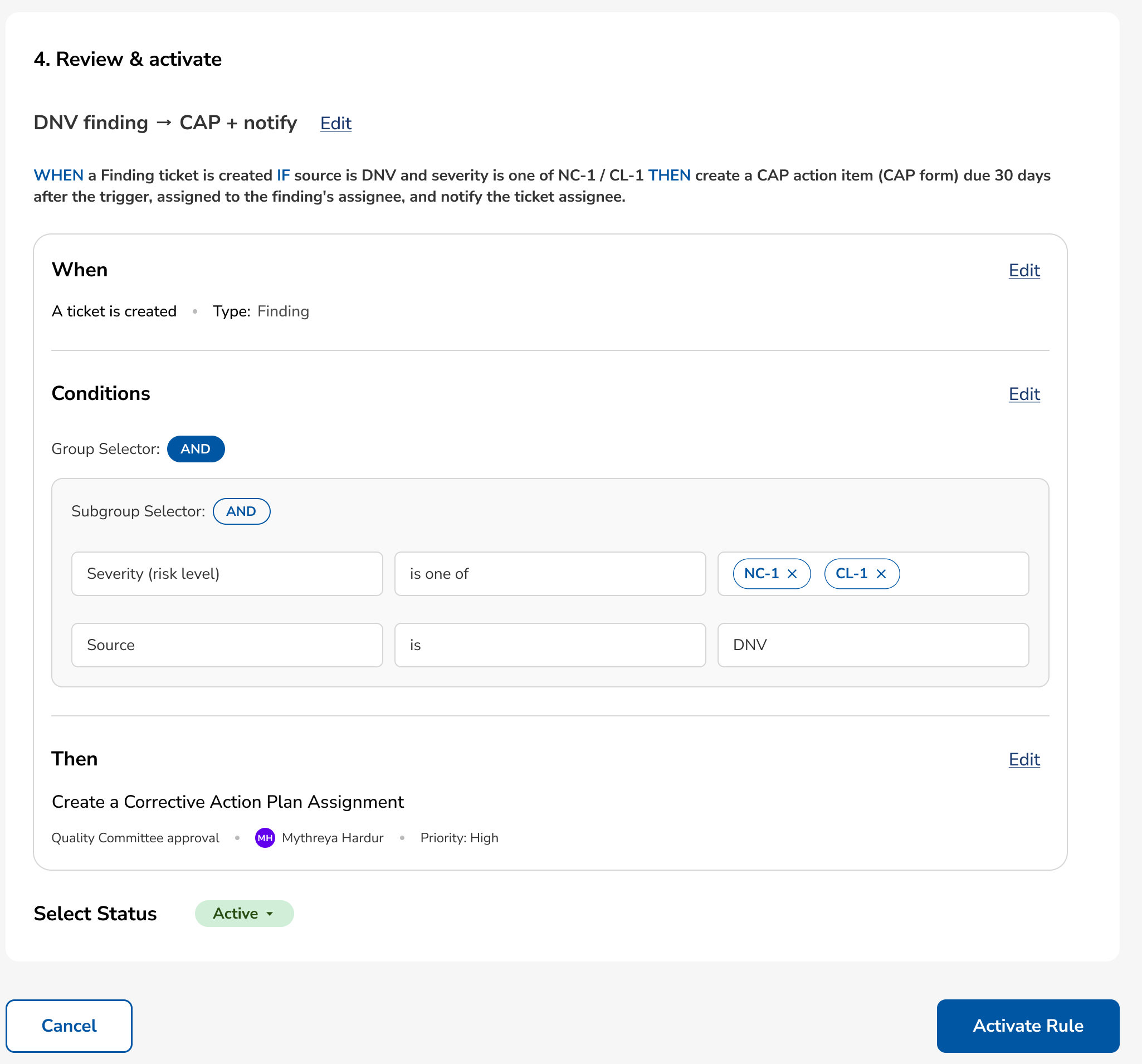
Light rule builder "Review & activate" step: an example rule ("DNV finding → CAP + notify") showing When/Conditions/Then logic and an auto-generated Corrective Action Plan assignment due 30 days after the trigger.

02

Clara is available to draft the CAPA and spot repeat citation risk

Clara, Medlaunch's AI agent, is available to draft the initial CAPA narrative, summarize prior findings tied to the same tag across departments, and flag when a new finding looks like a repeat citation risk.

03

Vendor and safety findings tracked on the same tags

Vendor Management and Risk Management findings can be tagged the same way, so contracted-service and safety-event issues tied to a CoP requirement flow into the same tag-level tracking as internal audit findings.

04

Every tag available as a taggable standard in Quality Core

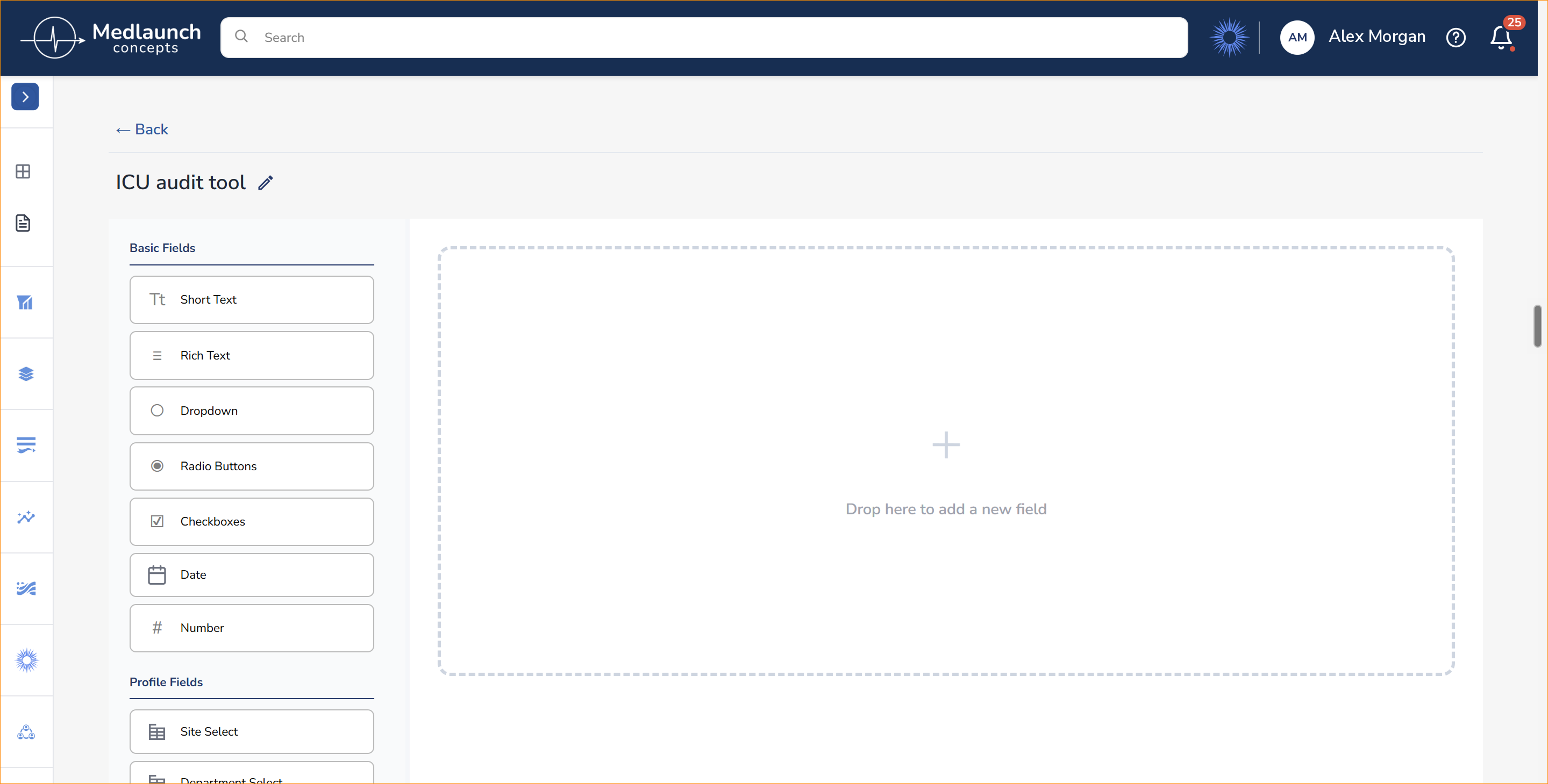
Inside Quality Core, every applicable CMS tag is available as a taggable standard on audit tools, rounding checklists, and finding records, so a finding isn't just "physical environment issue": it's tagged to the exact CoP requirement and tag number a surveyor would cite.

Light form builder in an empty canvas state: an "ICU audit tool" with a left-hand palette of field types (Short Text, Rich Text, Dropdown, Radio Buttons, Checkboxes, Date, Number, Site Select) and a "Drop here to add a new field" drop zone.

05

Deficiency trends by tag across every campus

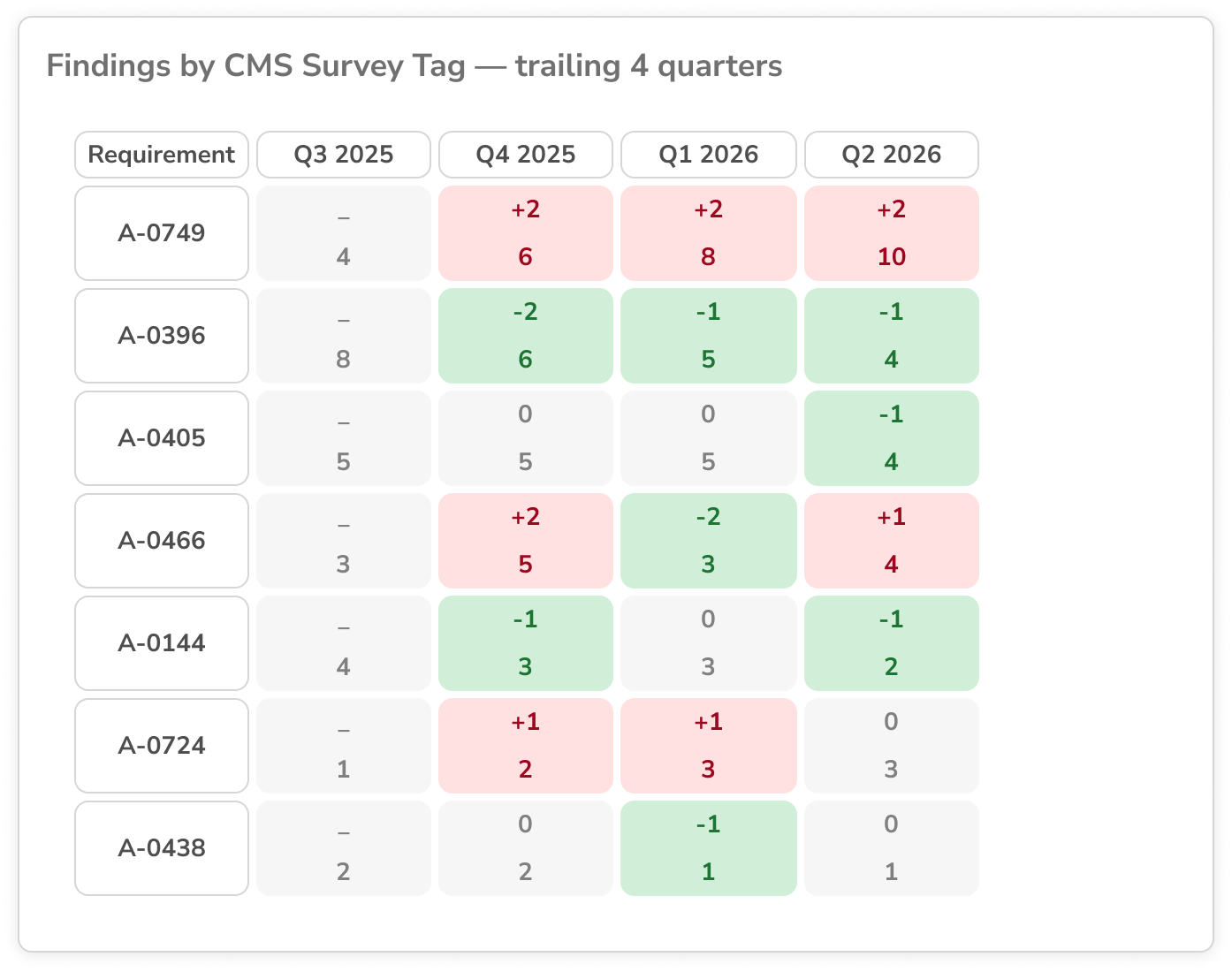
Relevance BI then reports deficiency trends by tag across units, campuses, or the whole system, so quality leaders can see which tags generate recurring findings well before the next survey window, and can demonstrate a track record of proactive self-identification and correction, the same posture CMS rewards during an actual survey.

Light quarterly heatmap: CMS survey tags (e.g. A-0749, A-0396, A-0405) by trailing four quarters (Q3 2025–Q2 2026), each cell showing a finding count and its quarter-over-quarter change.

See it running on your standards.

Book a demo and we will walk through Medlaunch against the frameworks you are surveyed on and the facilities you actually run.

Book a Demo