All frameworks

Accreditation

NFPA Codes: Managing Life Safety and Health Care Facilities Requirements

CMS's current regulation requires hospitals to comply with the 2012 editions of both codes, regardless of which edition a state or local authority has separately adopted (42 CFR 482.41(e); CMS: Life Safety Code & Health Care Facilities Code Requirements).

2012editions of NFPA 101 and NFPA 99 that CMS requires, regardless of the edition a state or local authority has adopted.42 CFR 482.41(e); CMS Life Safety Code page
43numbered chapters in NFPA 101 (2012 edition), from administration and means of egress through occupancy-specific chapters.42 CFR 482.41(e); NFPA 101 (2012 edition)
15chapters in NFPA 99 (2012 edition), from Gas and Vacuum Systems through Features of Fire Protection.NFPA 99-2012 chapter reference
Ch. 18–19New and Existing Health Care Occupancies, where hospitals fall in NFPA 101, with ambulatory care under Chapters 20 and 21.42 CFR 482.41(e); NFPA 101 (2012 edition)
What NFPA 101 and NFPA 99 Cover

The National Fire Protection Association (NFPA) publishes two codes that CMS has adopted as enforceable requirements for hospitals participating in Medicare and Medicaid: NFPA 101, the Life Safety Code, which governs construction, egress, and fire-protection features of a building, and NFPA 99, the Health Care Facilities Code, which governs the installation, testing, maintenance, and safe operation of building systems and equipment (electrical, gas and vacuum, HVAC, and more) (CMS: Life Safety Code & Health Care Facilities Code Requirements).

NFPA Codes by the Numbers

NFPA 101 (2012 edition) is organized into 43 numbered chapters, running from foundational chapters on administration, definitions, and means of egress through occupancy-specific chapters. Hospitals fall under Chapter 18 (New Health Care Occupancies) and Chapter 19 (Existing Health Care Occupancies), with related ambulatory care facilities covered separately under Chapters 20 and 21 (42 CFR 482.41(e); NFPA free access to the code text). NFPA 99 (2012 edition) is organized into 15 chapters, covering everything from Gas and Vacuum Systems (Ch. 5) and Electrical Systems (Ch. 6) to Electrical Equipment (Ch. 10), Gas Equipment (Ch. 11), and Features of Fire Protection (Ch. 15) (NFPA 99-2012 chapter reference). Not every NFPA 99 chapter reaches hospitals: 42 CFR 482.41(c)(1) provides that Chapters 7, 8, 12, and 13 of the adopted Health Care Facilities Code, Information Technology and Communications Systems, Plumbing, Emergency Management, and Security Management, do not apply to a hospital. CMS surveys both codes together during Life Safety Code surveys, which run on the same cycle as your standard health and safety survey.

Why NFPA Codes Belong in Your Quality Management System

Life Safety and Health Care Facilities Code deficiencies are among the most common, and most disruptive, citations hospitals receive, precisely because compliance depends on physical conditions (door hardware, corridor clearances, fire-alarm testing intervals, medical gas system inspections) that drift out of compliance between formal surveys if no one is actively tracking them. Because CMS ties Medicare participation directly to LSC/HCFC compliance, a facility-side gap here isn't just a quality issue, it's a deemed-status and reimbursement issue. Embedding NFPA 101 and NFPA 99 into your QMS means your facilities and safety teams are working from the same chapter-and-section structure your surveyors use, instead of translating between internal checklists and code language during a survey.

Keep Facilities Compliance Survey-Ready

See how Medlaunch turns NFPA 101 and NFPA 99 into a continuously monitored part of your environment-of-care program, request a walkthrough.

In the platform

How Medlaunch handles it

Every claim below is a screen you can open in a demo.

01

NFPA 101 and NFPA 99 as standards libraries

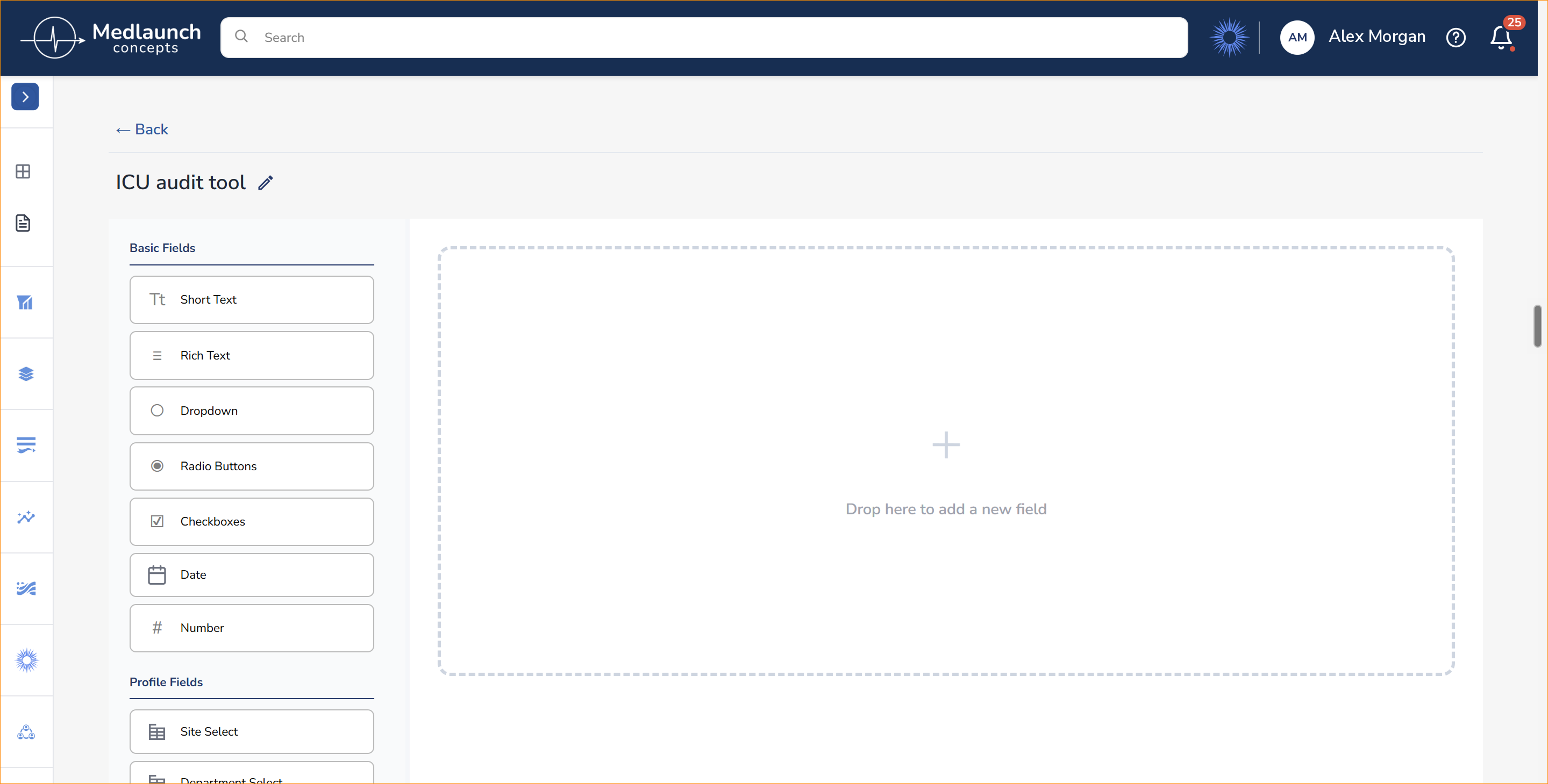
Medlaunch loads the NFPA 101 and NFPA 99 chapter and section structure as standards libraries inside Quality Core, so environment-of-care rounds, life safety audits, and equipment testing checklists in the platform are built directly against current chapter numbers.

Light form builder in an empty canvas state: an "ICU audit tool" with a left-hand palette of field types (Short Text, Rich Text, Dropdown, Radio Buttons, Checkboxes, Date, Number, Site Select) and a "Drop here to add a new field" drop zone.

02

Deficiency trends reported by code chapter

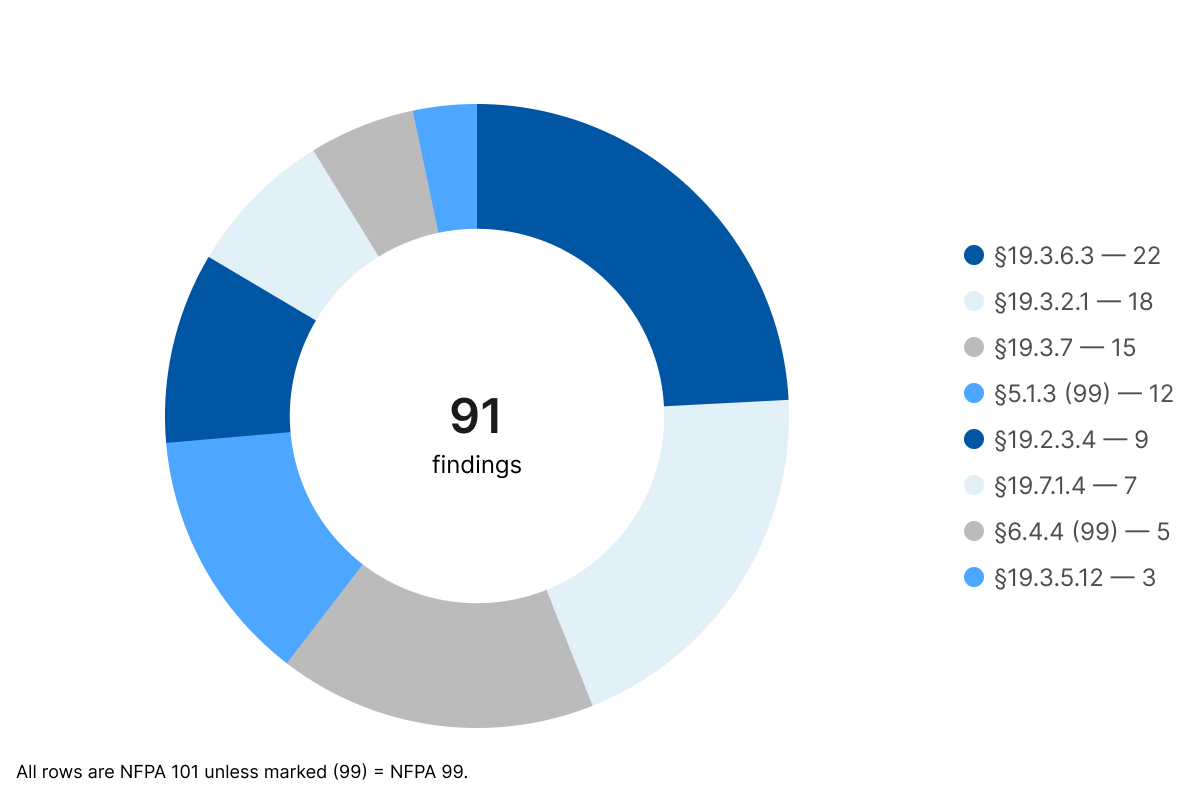
Rounding findings (a blocked corridor, an expired fire-extinguisher inspection tag, a missing medical gas alarm test) are tagged to the specific NFPA chapter and section, so Relevance BI can report deficiency trends by code chapter across buildings, campuses, or the whole system, making it easy to see whether Chapter 18/19 egress issues or Chapter 9 HVAC testing gaps are your recurring risk.

Light donut chart: 91 findings by NFPA 101/99 section (e.g. §19.3.6.3, §19.3.2.1, §5.1.3 marked as NFPA 99), largest segments first.

03

Facility policies mapped to the requirement they satisfy

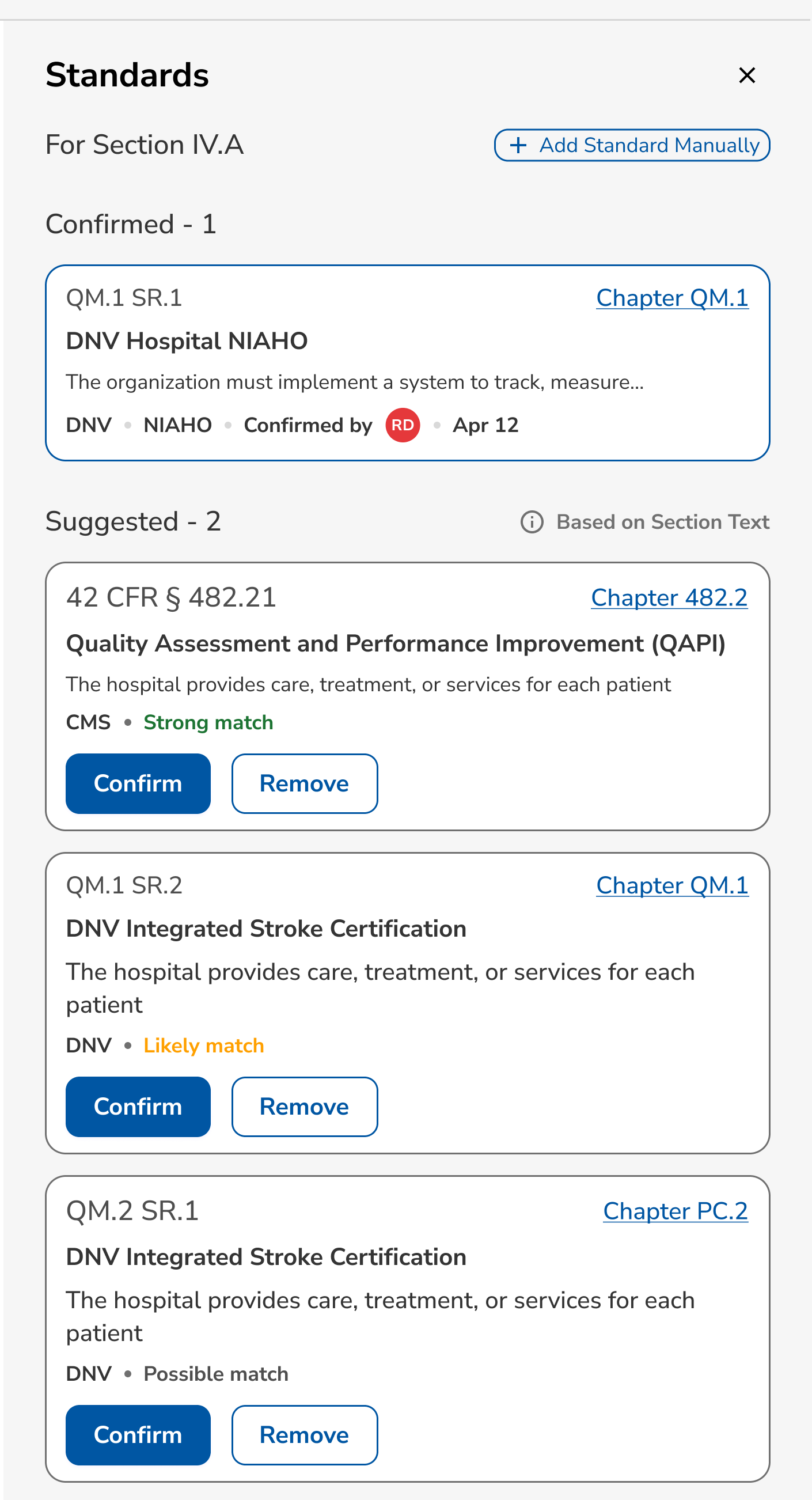
My Policy maps facility and life safety policies to the NFPA requirements they satisfy, so a surveyor question resolves instantly to the controlling procedure.

Light Standards panel for a policy section: one Confirmed standard and two Suggested standards, each showing its source (CMS, DNV) and a match-confidence label (Strong/Likely match) with Confirm/Remove actions.

04

Notified when NFPA or CMS updates the code

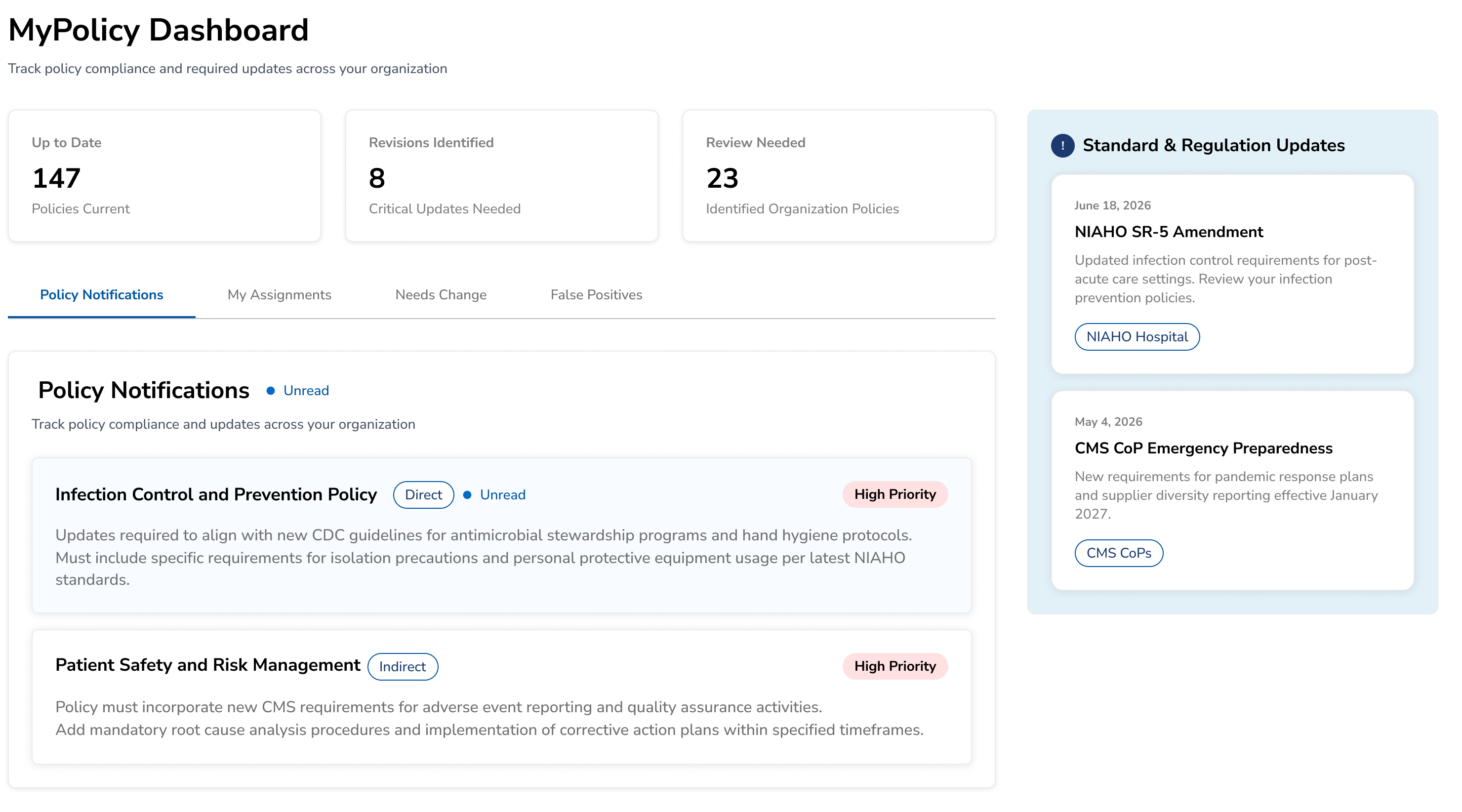
If CMS adopts a new edition or NFPA issues interpretive guidance, Medlaunch notifies you that the code changed and flags exactly which facility policies and audit tools it affects, tagged Direct or Indirect and prioritized, so owners can review and refresh them ahead of the next Life Safety survey.

Dark policy notifications dashboard: stat tiles for 147 policies current, 8 critical updates needed, and 23 needing review; a Standard & Regulation Updates panel with dated cards like a NIAHO SR-5 Amendment; and a Policy Notifications list tagging affected policies Direct/Indirect and High Priority.

See it running on your standards.

Book a demo and we will walk through Medlaunch against the frameworks you are surveyed on and the facilities you actually run.

Book a Demo