Closed Is Not the Same as Fixed.
Set what effective means for each corrective action, scope the check to a unit, a site or the whole organization, and let the platform run it on the date you chose. When a similar event recurs, it links back to the plan that was meant to prevent it.

Did It Actually Work?
Most organizations measure corrective actions by whether they were completed on time. That is a measure of your project management, not of your patients' safety. This page is about the other question.
You Define "Effective"
Zero recurrences on this unit in ninety days. A fall rate below a threshold. A re-audit that passes. Set the criterion when you close the action, in the terms your committee argues in, not in ours.
Scope It Where You Mean It
A criterion can apply to one department, one site, or the organization as a whole. A fix that worked on 4-West and nowhere else is a different result from a fix that worked everywhere, and the platform can tell you which you have.
Recurrence Detection
When a new event resembles one already closed, the platform connects them and reopens the question. You are told that the fix did not hold by the system, on the day it happens, instead of noticing it at the annual review.
The History Behind the Event in Front of You
Before you write a new corrective action, see the similar events, what was tried, who owned it, and whether it held. Most plans are rewrites of plans that already failed once.
Monitoring Windows That Run Themselves
The ninety-day check is a task with an owner and a date, created when the action closes. It happens whether or not anyone remembers it, and skipping it is visible rather than silent.
When a Plan Fails
A failed effectiveness check reopens the corrective action with the evidence attached and routes it back to the committee, rather than closing quietly and leaving the event to happen again.
Day 45 to Day 135, on One Unit
The corrective action closed on day 45: hourly rounding reinstated on 4-West, bed alarms re-audited, the fall-risk reassessment moved into the 22:00 workflow. The effectiveness criterion set at closure was zero falls with injury on 4-West in ninety days, and fall-risk reassessment compliance above the threshold the unit council agreed. On day 135 the check runs on its own. If a fall with injury lands on 4-West on day 60, the recurrence link fires immediately and the plan reopens with sixty days still on the clock.
When Monitoring Finds Something
A Recurrence Arrives Already Linked
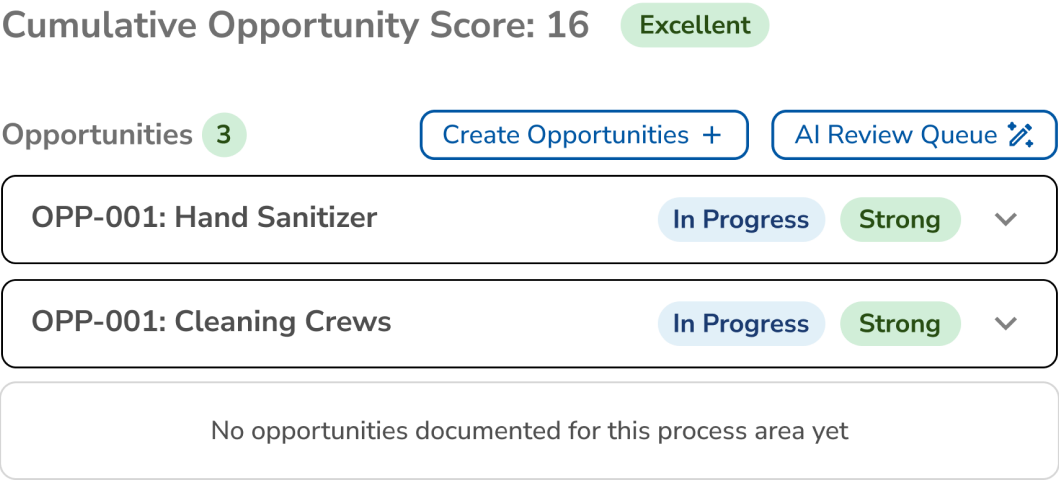
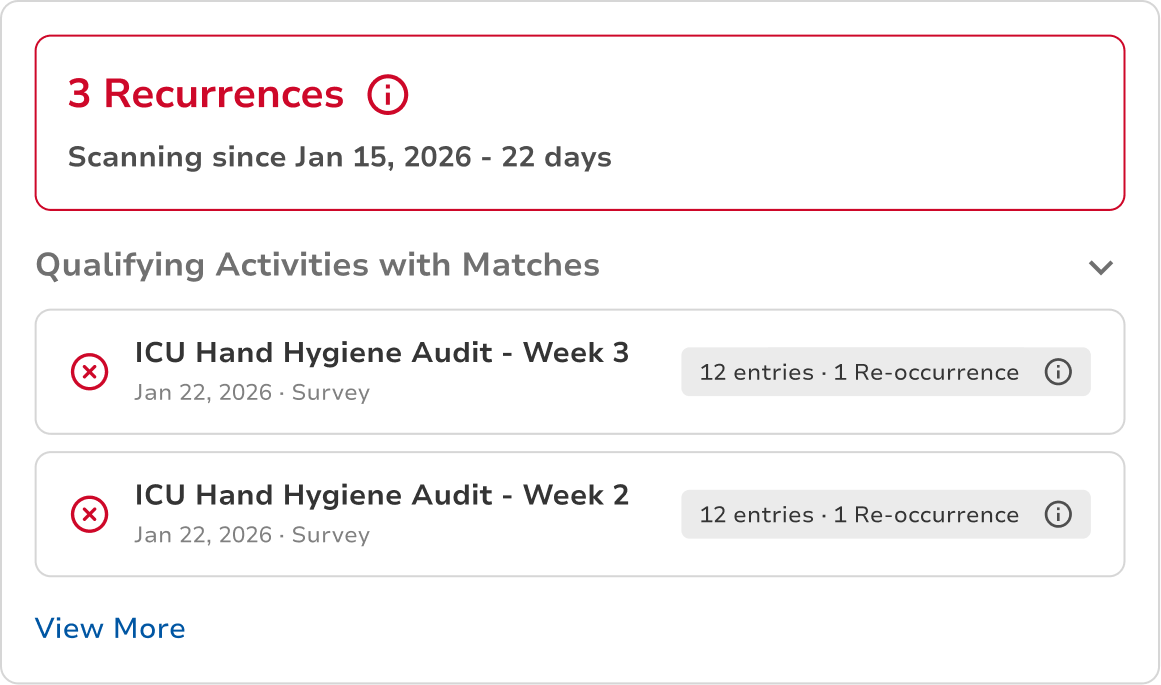
When a new event matches a plan still under monitoring, the plan counts it as a recurrence, shows how long it has been watching, and lists the activities the match turned up in, beside the closed events it traces back to. You open the evidence that the fix did not hold, not a blank case.
A recurrence arrives as a new case in the queue, already linked to the old one, see Incident Management.
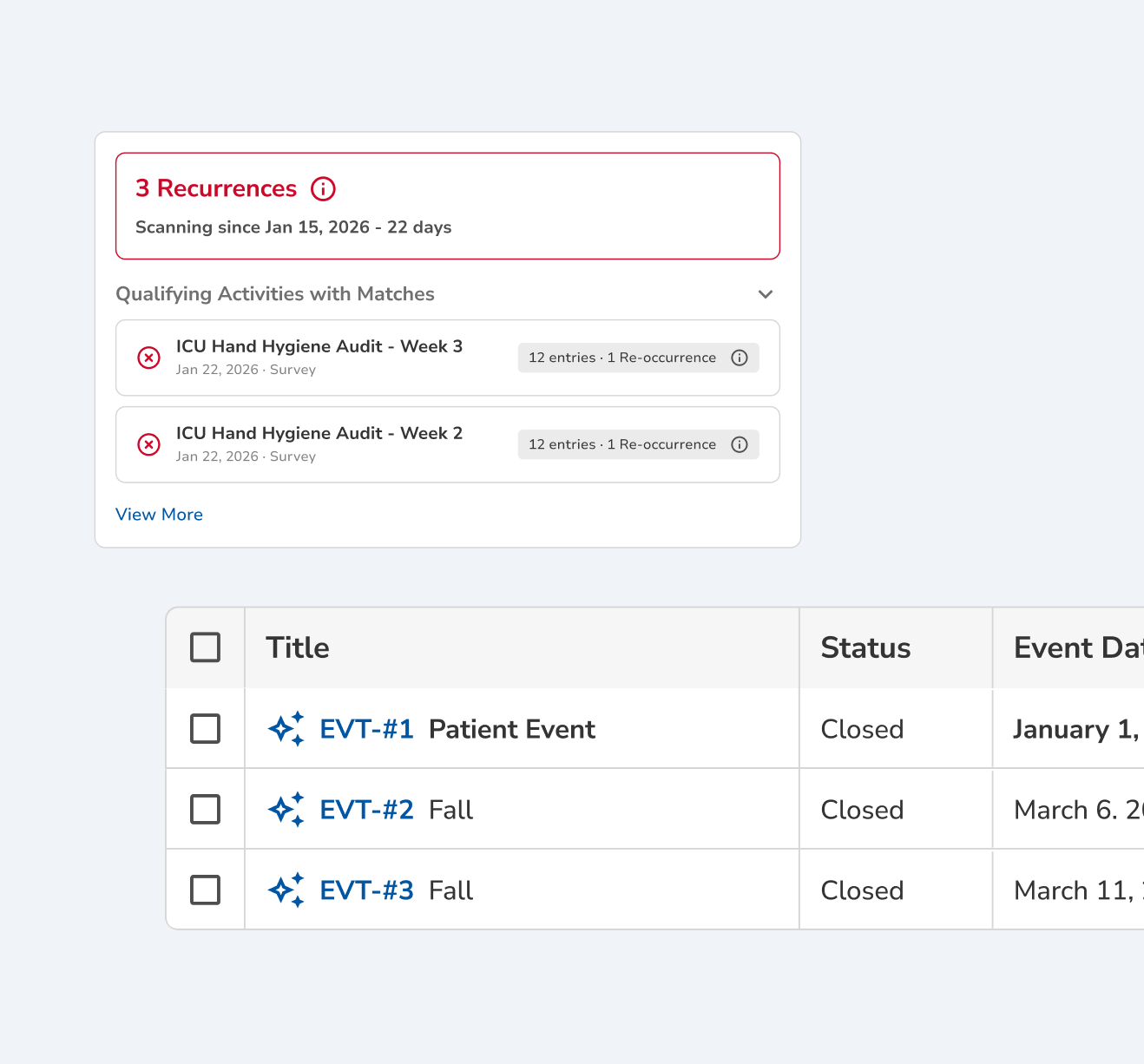
Every Check Against the Window
Each monitoring window shows what it is matching on, its dates and the days left, above every activity that has run against it since the plan closed. A clean result and a re-occurrence sit on the same list, so whether the fix is holding is a glance rather than an investigation.
The same monitoring runs on audit findings, whether a corrective action from an audit finding stopped the citation from recurring at the next survey.
Whether harm events recur is a number worth comparing outside your own walls: that is Benchmarking.
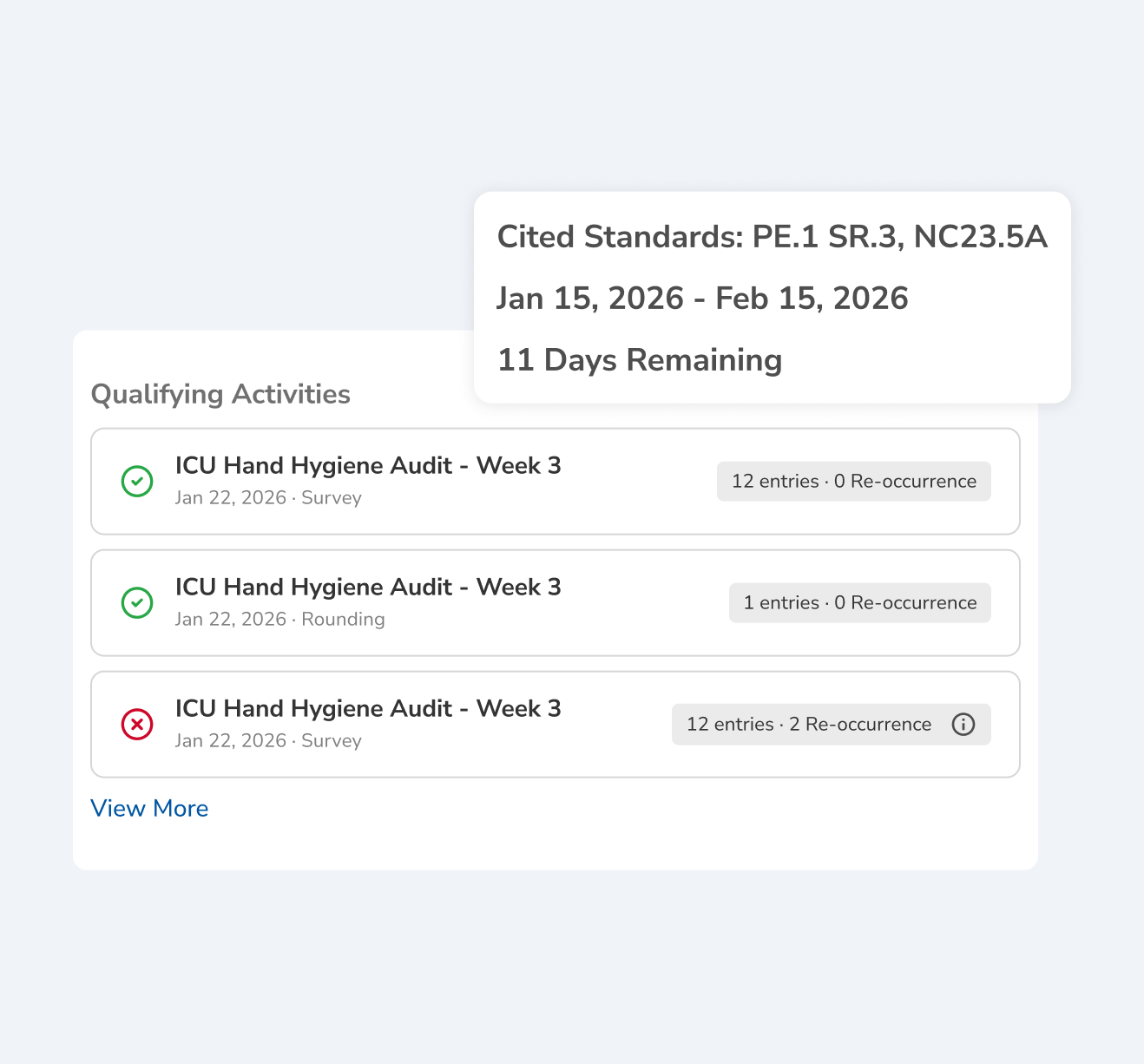
The Window Is Set When the Plan Closes
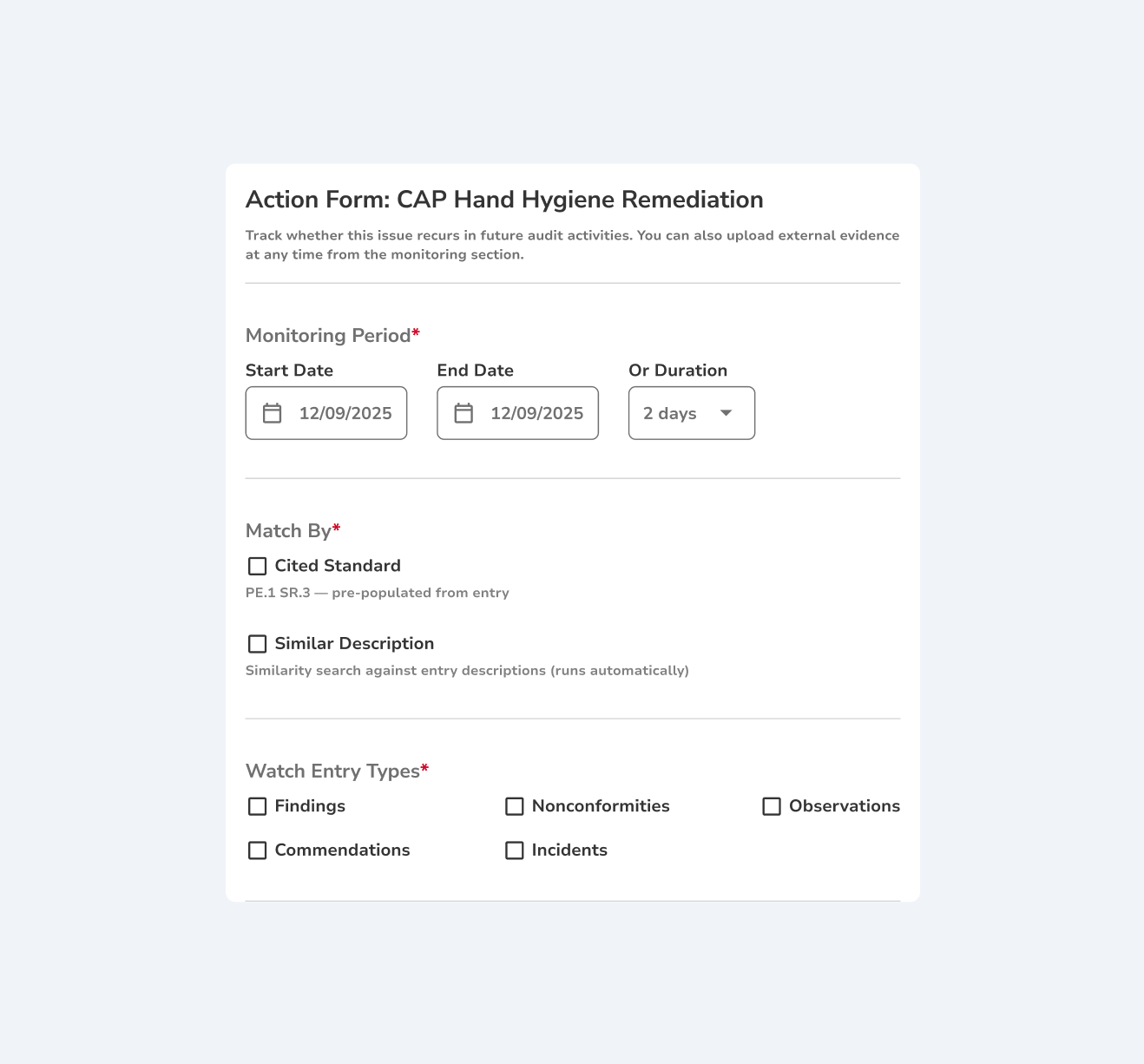
The monitoring period is part of the corrective action itself: start and end dates or a duration, what counts as a match, and which entry types to watch, incidents included. The check is defined before anyone has to remember it.
Every criterion on this page is set when a corrective action closes, in RCAs & CAPs.
How Clara AI Enhances
Effectiveness Monitoring
Clara's job here is recognition. She notices that a new event resembles a closed one, pulls forward the plan that was supposed to prevent it, and flags monitoring windows that are about to lapse. She raises the question; your committee decides whether the plan actually failed.

CLARA
Clarity in complianceClara reads
Clara proposes
Clara never marks a plan effective. The person who owns the criterion decides whether it worked and signs that call.